
Chinese divination practices have a rich history that spans thousands of years, deeply intertwined with the cultural and spiritual fabric of China. These practices, rooted in ancient philosophies and cosmologies, offer insights into the future, guidance for decision-making, and a deeper understanding of the universe’s workings. Let’s delve into some of the most prominent Chinese divination methods.
I Ching (Yijing)
The I Ching, also known as the Book of Changes, is one of the oldest Chinese texts and a cornerstone of Chinese divination1. It involves the use of hexagrams, which are symbols made up of six lines, each either broken or unbroken. These hexagrams are generated through methods such as tossing coins or manipulating yarrow stalks. Each hexagram corresponds to a specific interpretation, providing guidance on various life situations. The I Ching is not just a tool for divination but also a profound philosophical text that has influenced Confucianism, Taoism, and even Western thought.
Chinese Astrology
Chinese astrology is another popular form of divination, based on the lunar calendar and the Chinese zodiac, which consists of twelve animal signs. Each year is associated with a specific animal, and people’s fortunes are believed to be influenced by the characteristics of these animals. Additionally, the Four Pillars of Destiny (Bazi) method uses the year, month, day, and hour of a person’s birth to create a detailed astrological chart, offering insights into their personality, career, relationships, and more.
Feng Shui
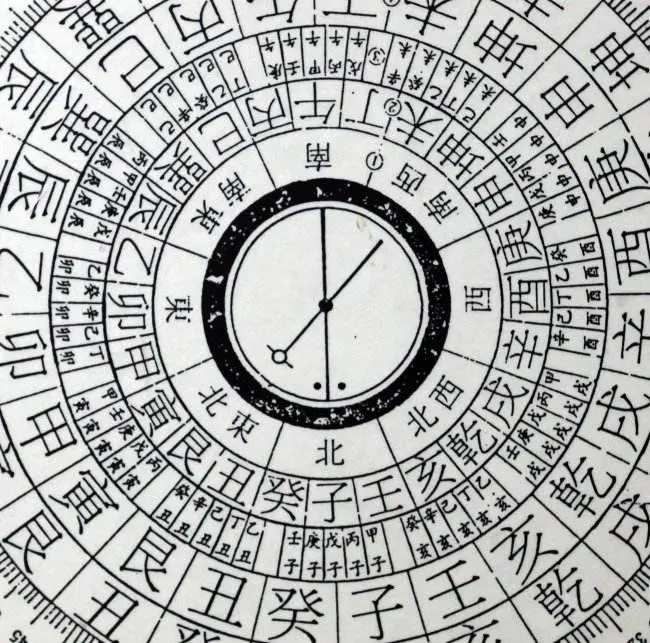
Feng Shui is the ancient Chinese practice of harmonizing individuals with their surrounding environment. It involves the arrangement of objects, buildings, and spaces to promote positive energy flow (Qi). By analyzing the placement and orientation of structures, Feng Shui practitioners aim to enhance health, wealth, and overall well-being. This practice is deeply connected to the principles of yin and yang and the five elements (wood, fire, earth, metal, and water).
Palmistry (Shou Xiang)
Palmistry, or Shou Xiang, involves reading the lines, shapes, and mounts of the hands to predict a person’s future and reveal aspects of their character. Each line on the palm, such as the heart line, head line, and life line, is believed to represent different facets of life, including love, intellect, and longevity. This practice is still widely used in China and other parts of Asia.
Face Reading (Mian Xiang)
Face reading, or Mian Xiang, is the art of interpreting facial features to determine a person’s fortune and personality traits. Different parts of the face, such as the forehead, eyes, nose, and mouth, are associated with various aspects of life. For example, a high, broad forehead is often seen as a sign of intelligence and good fortune.
Fortune Sticks (Kau Cim)
Kau Cim, also known as fortune sticks, is a traditional Chinese practice often performed in temples. It involves shaking a bamboo container filled with numbered sticks until one falls out. The number on the stick corresponds to a specific fortune, which can be interpreted by a temple priest or through a written guide. This method is popular for seeking answers to specific questions or guidance on important decisions.
Conclusion
Chinese divination practices offer a fascinating glimpse into the ancient wisdom and spiritual traditions of China. Whether through the profound insights of the I Ching, the cosmic alignments of astrology, or the environmental harmonies of Feng Shui, these practices continue to provide guidance and inspiration to many. As you explore these ancient arts, may you find clarity, wisdom, and a deeper connection to the world around you.