
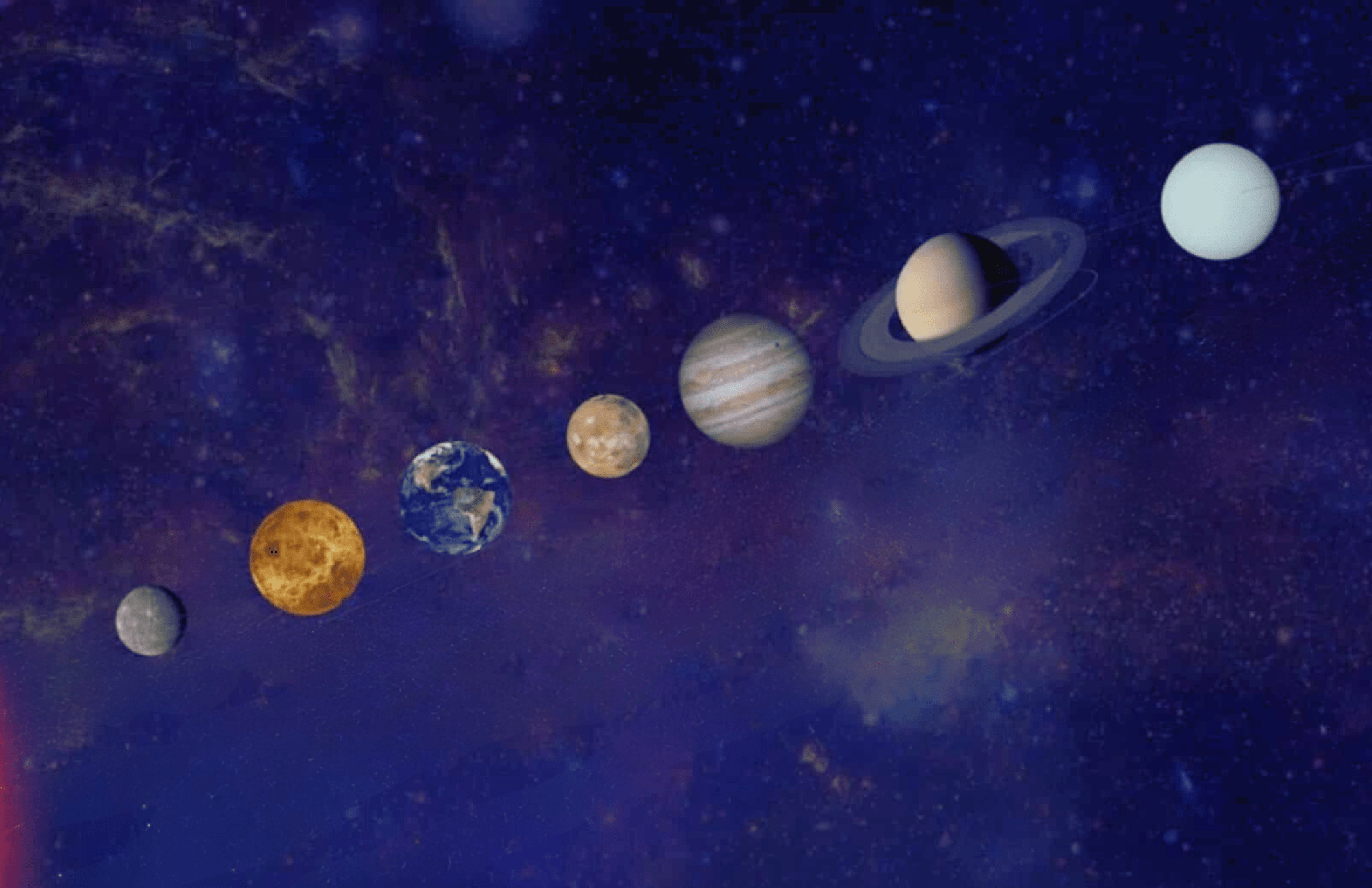
The night sky will become a celestial masterpiece on February 28, 2025. Seven planets will line up in a rare astronomical display that will reshape our view of the cosmos. Our naked eyes will catch Mercury, Venus, Jupiter, and Mars, while Saturn, Uranus, and Neptune will complete this extraordinary cosmic parade.
These “great” planetary alignments rarely occur in our skies. The next seven-planet alignment won’t happen until late 2028. We last saw this spectacular gathering during the total solar eclipse on April 8, 2024. This extraordinary event’s rarity, spiritual significance, and photography opportunities deserve exploration. Everyone should prepare to experience this magnificent celestial show.
The Rarity of Seven-Planet Alignments
People have always been captivated by planets lining up in the night sky. The Babylonians kept detailed records of these celestial events. They documented a remarkable “massing of planets” in 185 BC when Mercury, Venus, Mars, Jupiter, and Saturn appeared in a small part of the sky.
Historical alignments
The frequency of planetary alignments depends on how many planets come together. These celestial gatherings show up in different patterns – from simple two-planet meetups to rare displays with multiple planets. Here’s what makes these alignments special:
- Two to three planet alignments: Show up many times each year
- Four to five planet alignments: We see these every few years
- Six or more planet alignments: Show up about every 100 years
The last big seven-planet lineup happened in 2022. These events don’t look like the perfect straight lines you see in pictures. The planets spread across the sky’s section and follow an imaginary line called the ecliptic.
Why 2025 is different
The February 2025 alignment stands out for good reasons. All seven planets – Saturn, Mercury, Neptune, Venus, Uranus, Jupiter, and Mars – will be visible at once on February 28. Astronomers call this arrangement a “great” or “full” planetary alignment.
This event is a chance to see the planets during convenient evening hours. The next lineup like this won’t happen until late October 2028, and you’ll need to wake up early to see it. We won’t see another evening display of five planets until late February 2034.
This alignment is special because of its timing and visibility. While these celestial gatherings aren’t exactly rare, it’s uncommon to see all seven planets together when viewing conditions are good. Each planet’s orbit is different – from Mercury’s 88-day cycle to Neptune’s 165-year experience – which makes complete alignments like this truly remarkable.
Spiritual Significance in Different Cultures
“Engaging with the night sky encourages mindfulness, allowing individuals to momentarily detach from daily stresses and immerse themselves in the present moment. This practice can foster a sense of peace, restoration, and perspective.” — Dr Christopher Barnes, Senior lecturer at the University of Derby
Planetary alignments have fascinated cultures throughout history, from ancient times to modern spiritual practices. The Babylonians saw these celestial events as messages from above. They carefully tracked planetary movements and connected them to the destiny of their rulers and empires.
Ancient interpretations
Egyptian astronomers built their pyramids to line up with celestial bodies, which created a connection between earth and the heavens. They believed stars were their gods and these celestial beings shaped their daily lives. The Mayans wove these alignments into their complex calendar systems and saw them as signs of cycles that created and destroyed.
Modern spiritual meanings
The February 2025 planetary alignment means much more than just an astronomical event. Each planet in this formation brings its own special metaphysical qualities:
- Mercury improves communication and intuition
- Venus rules love and esthetics
- Mars adds passion and energy
- Jupiter broadens possibilities
- Saturn brings discipline and focus
Many metaphysical traditions see this alignment as a gateway to change that gives us a chance for personal growth and spiritual awakening. These cosmic moments make divine energies more available to humans.
Astrological perspectives
Astrologers read this alignment through its placement in five zodiac signs – Aquarius, Pisces, Aries, Taurus, and Gemini. The setup creates special energy patterns that shape both personal and collective awareness. This rare celestial event lets us contemplate, heal, and grow as the combined planetary forces create powerful changes.
Capturing the Celestial Show
You need careful preparation and the right equipment to capture this amazing celestial display. We used a sturdy tripod as the foundation for great planetary photography, whatever camera you choose.
Photography basics
You’ll need these items to get the best shots:
- A camera with manual controls and high ISO capabilities
- Wide-angle lens with f/2.8 or wider aperture
- Cable release or timer
- Red flashlight to adjust equipment
The best camera settings include manual focus set to infinity, ISO between 800-3200, and shutter speeds from 10-30 seconds. You should turn off autofocus because it doesn’t work well in low-light conditions.
Phone camera tips
Modern smartphones can now capture celestial events really well. You can tap into your phone’s full potential by using a dedicated night mode or slow-shutter app. Your device needs to rest against a solid structure or use a smartphone adapter for stability.
Manual control apps are a great way to get the right focus distance and exposure settings on your smartphone. Note that you should wait at least 15 minutes so your eyes adjust to darkness before you make any changes.
Time-lapse opportunities
Time-lapse photography is a chance to document this rare planetary lineup in a unique way. Your camera should take continuous shots over several minutes while keeping the equipment completely still. The ‘500 rule’ helps prevent rotation blur in your final image by limiting individual exposure times based on focal length.
Practice your setup and timing before the event. Clear skies and good weather forecasts are vital for success since atmospheric conditions affect image quality by a lot. Specialized stacking software can combine multiple exposures to enhance your final result’s clarity and detail.
Planning Your Viewing Experience
“Even people in cities and light-polluted areas will be able to see most of the planets, but for the best views, it is advisable to find a darker location.” — Dr Christopher Barnes, Senior lecturer at the University of Derby
Your success in seeing the planetary alignment in 2025 depends on good preparation and smart planning. You need to pick the right spot to watch this amazing event, and several factors come into play.
Choosing the perfect location
A perfect viewing spot needs these vital elements:
- A clear view of the southwestern horizon
- Dark skies away from city lights to see better
- High ground like hilltops or open fields
- A spot that’s safe and available after sunset
Creating a viewing timeline
We planned to start watching 30 to 45 minutes after the local sunset. February 28 gives you the best chance to see everything, as Mercury joins the other planets. The planets will drift apart by mid-March.
Making it a social event
This rare planet lineup is a chance to bring people together. You could set up a viewing party at public spaces or team up with local astronomy clubs. People who know their way around the night sky can help newcomers spot each planet, which makes it fun and educational.
Groups can share telescopes and point them at different planets. Many national parks now host special stargazing events with expert guides and great viewing spots. Bring binoculars to help you find Uranus and Neptune.
Conclusion
The universe’s magnificent choreography becomes visible in this remarkable planetary alignment. Seven-planet alignments occur about once every hundred years, and February 28, 2025, gives us a chance to see this celestial spectacle during convenient evening hours.
This alignment holds deep spiritual meaning in many cultures. Scientists and those seeking metaphysical connections find it equally fascinating. You can capture this moment through careful photography or simply gaze upward with friends and family to create unforgettable memories.
Good preparation determines your success in viewing this cosmic display. The best possible experience requires dark locations away from city lights, proper viewing equipment, and correct timing. Weather conditions play a significant part, so check the forecasts before heading out.
The celestial gathering shows our place in the cosmic dance. These planets might appear close from Earth, but they actually span millions of miles. This showcases our solar system’s incredible scale. February 2025 gives us a chance to pause, look up, and marvel at the wonders above, until the next alignment in 2028.
FAQs
Q1. When will the planetary alignment of 2025 occur? The planetary alignment of 2025 will take place on February 28, when seven planets will line up in a rare astronomical display visible in the night sky.
Q2. Which planets will be visible during the 2025 alignment? All seven planets of our solar system will be visible during this alignment. Mercury, Venus, Jupiter, and Mars will be visible to the naked eye, while Saturn, Uranus, and Neptune will complete the cosmic parade.
Q3. How can I best view the planetary alignment? For the best viewing experience, choose a location with an unobstructed view of the southwestern horizon and minimal light pollution. Begin your observation 30 to 45 minutes after local sunset on February 28, 2025.
Q4. What makes the 2025 planetary alignment special? This alignment is special because it’s a “great” or “full” planetary alignment, with all seven planets visible simultaneously during convenient evening hours. Such complete alignments with favorable viewing conditions are uncommon.
Q5. How can I photograph the planetary alignment? To photograph the alignment, use a camera with manual controls and a wide-angle lens. Set up on a sturdy tripod, use manual focus set to infinity, and experiment with ISO settings between 800-3200 and shutter speeds of 10-30 seconds. For smartphone users, utilize night mode or slow-shutter apps for best results.