
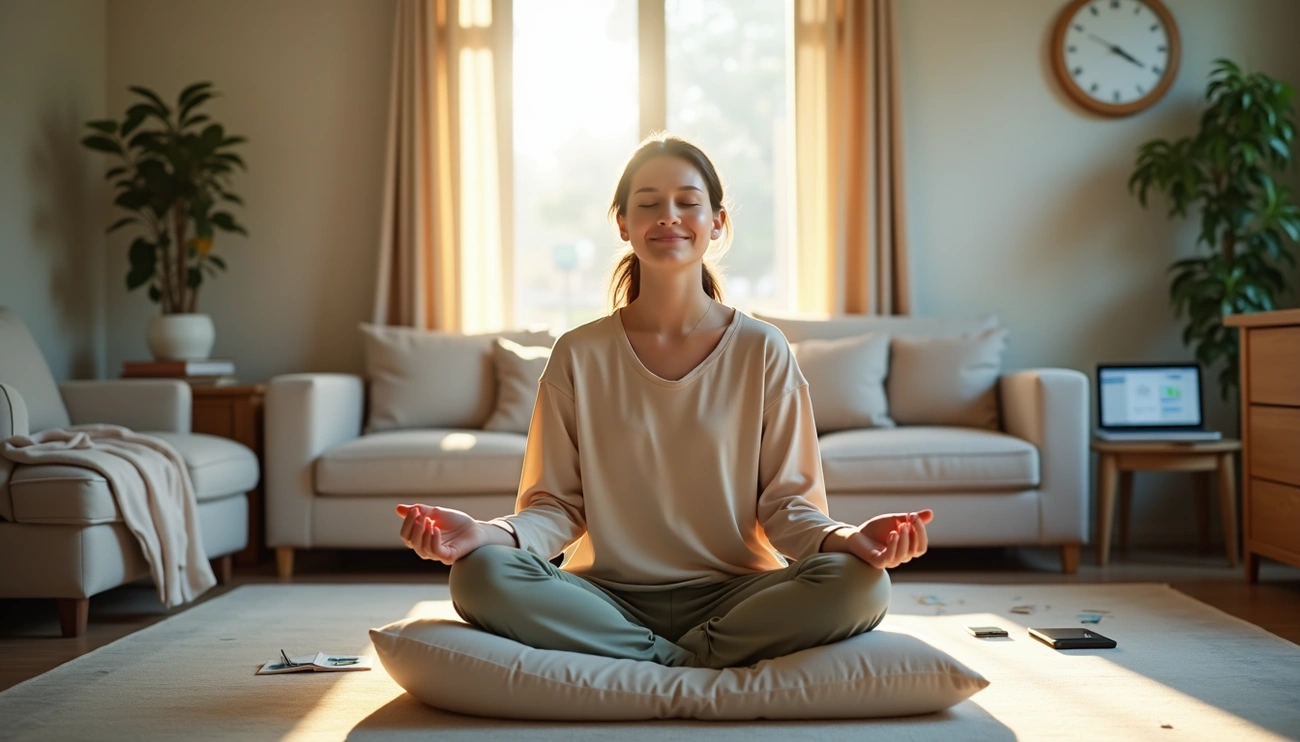
Inner peace doesn’t need meditation on a mountaintop or expensive wellness retreats . Most people chase tranquility in all the wrong places, missing the simple truth that peace starts right where you are.
Life in our hyper-connected world makes inner peace seem like a distant dream. The chaos around us shouldn’t stop us from finding mental peace—we just need to face challenges with calm, clarity, and compassion . Peace amid chaos builds more than temporary relief; it creates lasting resilience.
My experience shows how mindfulness becomes a bridge to tranquility. It helps us step away from the constant worries and stress that fill our days . Research links mindfulness to lower blood pressure, better sleep, and a stronger immune system .
This piece will show you what inner peace really means and why it seems so hard to grasp. You’ll learn practical ways to find peace during your busiest moments. The focus stays on simple approaches that work in everyday life, without needing major lifestyle changes.
What inner peace really means
“You find peace not by rearranging the circumstances of your life, but by realizing who you are at the deepest level.” — Eckhart Tolle, Spiritual teacher and author of “The Power of Now” and “A New Earth”
Many people see inner peace as some mystical state that only monks or spiritual masters can reach. True inner peace isn’t about running away from life—it’s about a different way to connect with it.
It’s not about escaping stress
Inner peace doesn’t mean you need to eliminate stress or wait for everything to be perfect. It exists among life’s challenges, not in their absence. Life becomes harder when we let our happiness depend on external circumstances. We give away control of our well-being to forces we can’t predict [1].
You’ll wait forever if you expect all external factors to line up perfectly before finding peace [1]. Inner peace lives right next to our difficulties. The real change comes from how we deal with these struggles, not trying to avoid them.
A meditation teacher puts it well: “You cannot wait until life calms down. You won’t be able to have peace once life’s sorted” [2]. The real meaning of inner peace lies in your ability to stay centered whatever happens around you.
The difference between calm and numb
People often miss a vital difference between being calm and emotionally numb. Emotional numbness happens when we shut down our feelings—both good and bad—because we want to avoid pain [3]. This might feel like relief at first, but it guides us toward emptiness and disconnection.
Real inner peace works differently. It’s not about having no emotions—it’s knowing how to experience all feelings without letting them take over [3]. Peace means you can stay present with whatever comes up, including tough emotions, while you retain control.
You know you’ve found true peace when you feel present and connected to life. You accept emotions as they appear and manage to keep your stability even in tough times [3].
Why inner peace is a skill, not a state
You don’t just achieve inner peace once and keep it forever—it’s a skill you need to practice regularly. Think of it differently than climbing to a mountain top. You need to work on inner peace daily, sometimes several times in one day [4].
Inner peace grows step by step through steady practice. At first, peaceful moments might feel brief against life’s noise. With time and practice, peace becomes your natural state, and disturbances just come and go [5].
Here’s the good part—this skill is available to everyone, whatever their lifestyle or job [6]. Through mindful attention and time to think over your approach, you can develop your capacity for inner peace—even when life gets stormy.
Why inner peace feels so hard to find
Finding inner peace feels like searching for a needle in a haystack. This elusive state remains out of reach as we face several core obstacles along the way.
The myth of needing perfect conditions
Many people believe they need perfect external circumstances to find inner peace. They put off finding tranquility until “life calms down” or until reaching some idealized future state. Notwithstanding that, this approach keeps them from experiencing peace right now [2].
This belief creates an endless cycle of postponement. A meditation expert points out, “Life never calms down. It’s the student that learns to be still while the world keeps spinning” [2]. People stay trapped in constant striving instead of accepting peace within the present moment [7].
Most people think inner peace means a life without challenges or stress—an unrealistic expectation that leads to disappointment [8].
How modern life keeps us distracted
Our technology-filled world creates another major barrier. People don’t end up with more free time despite their time-saving devices. Other commitments rush in to fill every available second instead [9].
People fall into a constant productivity trap. The endless pressure to stay productive drives them toward burnout as they ignore their body’s need for rest and connection [9]. Their minds stay busy, which substantially reduces their capacity for self-awareness [10].
Screen time, social media, and entertainment fill every moment of downtime. This habit blocks the mental space needed for peace to emerge [10].
The role of overstimulation and burnout
The modern world overwhelms our senses beyond what our nervous systems can handle [9]. This endless overstimulation traps our bodies in “fight or flight” mode. People become irritable, struggle to focus, and feel emotionally exhausted [11].
Our brains need rest to process information and emotions properly. Thoughts race out of control without enough downtime. Stress builds up and relaxation feels impossible [12].
Regular interactions become draining under these conditions. The constant pressure to respond, participate, and stay available creates mental fatigue [12]. This overstimulation drains emotional reserves over time, pushing inner peace further away.
Simple practices to start finding peace within yourself
“Sometimes the most important thing in a whole day is the rest we take between two deep breaths.” — Etty Hillesum, Dutch writer and Holocaust diarist whose reflections are widely cited on presence and meaning
You don’t need massive life changes to find tranquility. Simple daily practices can build your capacity for inner peace. Here are five proven techniques you can start right now:
1. Try mindful breathing anywhere
Your breath can be a portable peace tool that’s always available. This practice uses breathing as an anchor to the present moment and stops your mind from dwelling on past regrets or future worries.
The 4-7-8 breathing technique works best when you have stressful moments:
-
Inhale quietly through your nose for 4 seconds
-
Hold your breath for 7 seconds
-
Exhale completely through your mouth for 8 seconds
-
Repeat 3-4 times
This technique activates your parasympathetic nervous system and helps move your body from “fight or flight” to a calmer state.
2. Use body scans to reconnect with yourself
Body scanning helps you notice and release physical tension you might carry without knowing. Take 5-10 minutes during your day to:
-
Find a comfortable position (sitting or lying down)
-
Focus on your breath briefly
-
Direct attention slowly from your toes up through your body
-
Notice sensations without judgment (warmth, coolness, tension, comfort)
-
Watch areas of discomfort with compassion
-
Release tension as you exhale
Studies show body scans reduce stress and improve emotional regulation by strengthening mind-body awareness.
3. Practice gratitude in small moments
Gratitude moves your brain’s focus from what’s missing to what’s present. The “Sacred Pause Practice” takes just 30 seconds:
-
Set three gentle alarms throughout your day
-
Stop whatever you’re doing when they sound
-
Take three conscious breaths
-
Find one thing you appreciate in that moment
-
Let the feeling of appreciation fill your chest
Your nervous system begins to relax after two weeks of regular practice, and you’ll start noticing gifts instead of scanning for problems.
4. Visualize a peaceful place when overwhelmed
Visualization creates a buffer between you and intense feelings when emotions run high. Close your eyes and:
-
Picture a place that brings you peace
-
Let all your senses come alive (what do you see, hear, smell, feel?)
-
Take in colors, textures, sounds, and scents
-
Breathe slowly as you explore this mental sanctuary
-
Let your body feel the calm of being there
This technique keeps your mind focused on positive thoughts and gives you a mental break from stress.
5. Create a short daily pause ritual
Set aside specific moments each day for brief mindfulness breaks. These “micro-moments of awareness” stop stress from building up. You could:
-
Start a morning ritual before checking devices
-
Take a midday break to check your body and emotions
-
Wind down 90 minutes before sleep
These pauses need consistency more than length—even 1-2 minutes can reset your nervous system and create room for inner calm.
How to make inner peace part of your daily life
You can make inner peace a constant companion rather than an occasional visitor by weaving it into your daily life. The good news is you just need to pay consistent attention to what matters most, not spend hours meditating.
Start with micro-moments of awareness
Brief bursts of awareness lasting 30-60 seconds can reset your nervous system throughout the day. These “micro-mindfulness” practices make a real difference. Take three conscious breaths whenever you switch between activities. These quick mindfulness moments fit easily into packed schedules and help rewire your brain’s response to stress.
Use your routine as a mindfulness tool
Your daily activities provide natural opportunities for mindfulness practice. Feel the water’s temperature on your skin while showering. Pay attention to the bristles against your gums as you brush your teeth. Focus on each bite during meals without distractions. Bringing full attention to these ordinary moments helps you foster presence naturally.
Set boundaries to protect your mental peace
Think of boundaries as your personal force field that guards your peace of mind. First, identify your emotional, mental, and physical limits. Express these boundaries clearly with “I” statements. Note that being consistent matters here. Setting limits might feel awkward at first, but it prevents burnout and resentment while creating room for genuine peace.
Let go of perfection in your practice
Mindfulness isn’t about reaching a perfect state—it actually helps fight perfectionism. When you notice your inner critic demanding flawlessness, acknowledge that thought pattern without judgment. Your true peace comes from accepting your human nature, not from chasing impossible standards.
Conclusion
Finding inner peace when life feels chaotic might seem impossible at first glance. But tranquility doesn’t depend on perfect circumstances or dramatic lifestyle changes. Peace emerges from our relationship with life’s inevitable challenges.
We found that inner peace isn’t about escaping reality – it’s about engaging with it differently. Life bombards us with distractions and overstimulation, but simple practices like mindful breathing, body scans, and gratitude can anchor us to the present moment. These techniques work by addressing our basic need to feel present and connected.
Society often glorifies non-stop productivity, but true wellbeing needs balance. Building boundaries and adding small moments of mindfulness throughout your day helps build resilience against stress. The best part? You don’t need special equipment, lots of free time, or perfect conditions to start.
Note that developing inner peace is more like tending a garden than climbing a mountain. Some days will feel easier than others – and that’s perfectly normal. Peace isn’t about being perfect but about embracing your humanity with compassion and awareness.
Your path to inner peace begins right where you are. A mindful breath, a moment of gratitude, or simply noticing tension in your body creates ripples of calm that grow over time. Life will always have its storms, but you can develop an unshakable core of peace that stays steady through it all.
Key Takeaways
Inner peace isn’t about escaping life’s challenges or waiting for perfect conditions—it’s a learnable skill that helps you navigate chaos with calm and clarity.
• Inner peace is a skill requiring daily practice, not a permanent state you achieve once and keep forever.
• Simple techniques like 4-7-8 breathing, body scans, and gratitude pauses can be practiced anywhere to reset your nervous system.
• Micro-moments of mindfulness (30-60 seconds) throughout your day are more effective than waiting for long meditation sessions.
• Setting clear boundaries protects your mental peace and prevents emotional exhaustion from constant availability.
• True tranquility comes from changing your relationship with stress, not eliminating it from your life entirely.
The path to inner peace begins exactly where you are now—no special equipment, perfect conditions, or dramatic life changes required. Even small daily practices create lasting resilience against life’s inevitable storms.
FAQs
Q1. How can I find inner peace in a busy world? Start with small practices like mindful breathing, body scans, or gratitude pauses throughout your day. These micro-moments of awareness can help reset your nervous system and create space for calm, even in a hectic environment.
Q2. Is inner peace about eliminating stress completely? No, inner peace isn’t about eliminating stress entirely. It’s about developing the ability to remain centered and calm regardless of external circumstances. True inner peace coexists with life’s challenges rather than avoiding them.
Q3. How can I incorporate mindfulness into my daily routine? Use everyday activities as opportunities for mindfulness. For example, pay full attention to the sensations while showering, brushing your teeth, or eating meals. This allows you to practice presence without requiring extra time in your schedule.
Q4. Why does inner peace feel so hard to achieve? Inner peace can feel elusive due to common misconceptions, like needing perfect conditions or confusing peace with emotional numbness. Additionally, our modern lifestyle of constant stimulation and distraction can make it challenging to cultivate stillness and self-awareness.
Q5. Do I need to meditate for hours to find inner peace? No, you don’t need lengthy meditation sessions to cultivate inner peace. Consistent, brief practices throughout your day can be more effective. Even 1-2 minute pauses for mindful breathing or checking in with your body can gradually build your capacity for inner calm.
References
[1] – https://medium.com/mystic-minds/inner-peace-is-not-something-you-find-its-something-you-create-cdc8ffcc21b5
[2] – https://stillnessinthestorms.com/episode/the-truth-about-inner-peace-5-myths-debunked
[3] – https://mattmeyercounseling.com/emotional-numbness-vs-peace-recognizing-the-difference/
[4] – https://www.quora.com/Is-inner-peace-a-constant-state-or-does-it-require-continuous-effort-and-practice
[5] – https://tinybuddha.com/blog/9-beliefs-you-have-to-let-go-if-you-want-to-find-inner-peace/
[6] – https://www.lifesjourneyblog.com/5-reasons-why-inner-peace-is-important/
[7] – https://lonerwolf.com/inner-peace/
[8] – https://neuropathbhc.org/myths-that-may-be-holding-you-back-from-peace/
[9] – https://www.drashleysmith.com/blog/modern-life-is-taking-a-toll-on-mental-health
[10] – https://www.psychologytoday.com/us/blog/contemplative-psychology/202401/6-daily-techniques-to-cultivate-inner-peace
[11] – https://www.reviveucc.com/senses-overload-emotional-burnout-nervous-system/
[12] – https://kentuckycounselingcenter.com/how-overstimulation-can-affect-your-mental-well-being/
Leave a Reply