
Author: Naveem
-

Why Marcus Aurelius Used Memento Mori to Find Joy (And How You Can Too)
“Look behind you! Remember, you are human!” A slave whispered these powerful words into the ears of victorious Roman generals during their triumphs. The slave had one humbling duty. This ancient practice of Marcus Aurelius memento mori teaches us that death remains inevitable, even in our greatest moments of glory. The Latin phrase memento mori…
Written by
·
-

The Four Noble Truths of Self-Discovery: Applying the Core Buddhist Principles
The Buddha shared his four noble truths about 2,500 years ago as a way to help people deal with suffering . These teachings work like a psychological framework today, which makes the Buddha our first psychotherapist . His four noble truths tell us that we live constantly dissatisfied, explain why this happens, confirm we can…
Written by
·
-

Existence Precedes Essence: The core Existentialist belief
Life’s biggest question haunts us all – does fate determine our purpose, or do we shape it ourselves? The concept of existence before essence challenges traditional philosophical thinking with a bold idea. We exist first and then define who we become. Humans stand apart from objects that serve predefined purposes. We don’t follow any fixed…
Written by
·
-

Embracing “Wu Wei”: The Taoist Principle of Effortless Action and Going with the Flow
The concept of wu wei might appear paradoxical – “doing nothing” yet accomplishing everything. Taoism’s ancient Chinese wisdom presents wu wei as effortless action rather than mere inactivity or laziness. Lao Tzu, Taoism’s founder, captured this wisdom perfectly: “Doing nothing is better than being busy doing nothing”. Wu wei’s literal translation means “inaction” or “non-doing,”…
Written by
·
-
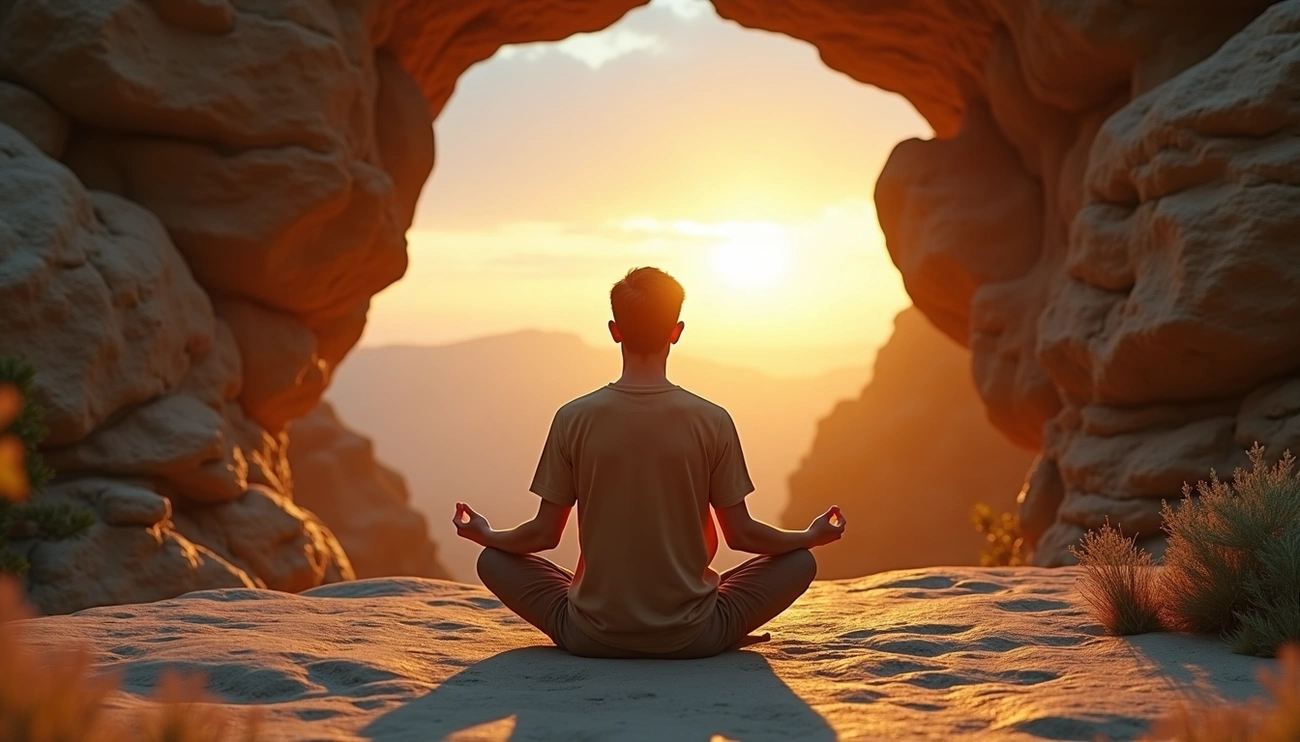
The Inner Citadel: A Beginner’s Guide to Building Mental Strength
“The inner citadel is a fortress of the mind.” Stoic philosophers first championed this powerful concept that represents our internal sanctuary of mental strength and resilience. People can retreat to this personal stronghold “where both your destruction and deliverance lie” during overwhelming external circumstances. The stoic inner citadel’s meaning goes beyond philosophical theory and provides…
Written by
·
-

The Hidden Truth About Anatta Buddhism: Why No-Self Leads to True Freedom
Your beliefs about yourself might be nothing more than an illusion. Anatta Buddhism challenges our deepest beliefs about identity with a radical proposition – there is no permanent self . This concept of “no-self” stands as one of the three foundations of existence in Buddhist philosophy, among dukkha (suffering) and anicca (impermanence) . The concept…
Written by
·
-

Finding Your Dharma: How the Hindu concept can guide your life’s path
The dharmic path shows us how to find answers to life’s deepest questions. Most of us wonder about our true purpose or feel lost in today’s chaotic world. Many people search for meaning, and this ancient wisdom might have the answers we seek. Dharma stands as a core concept across Indian religions. No single translation…
Written by
·
-

The Hidden Power of Journaling for Self Discovery: From Stuck to Breakthrough
Journaling for self discovery changed my life at a time I felt stuck in patterns I couldn’t break. Research shows this simple practice helps you process and manage stress better while promoting emotional wellbeing . Writing my thoughts on paper lets me understand myself in ways that just thinking never could. Deep journal prompts help…
Written by
·
-

Holistic Wellness: Integrating Mental Health Practices with Herbal and Elemental Magic
An all-encompassing approach to wellness has become increasingly popular. Recent data shows 38% of adults in the United States now use complementary and alternative medicine (CAM) . This therapy looks at the whole person – body, mind, and spirit – to achieve optimal health and well-being . Research reveals better health outcomes for patients who…
Written by
·
-

The Chakras and Beyond: A Comprehensive Look at Your Energetic Anatomy
Spiritual traditions have included chakras for over 4000 years. These energy centers have gained prominence with yoga and New Age philosophies becoming more popular. The Vedas, ancient sacred texts from 1500 to 1000 BC, first mentioned these energy centers that are the foundations of our body’s energetic system. Chakras serve as energy centers throughout the…
Written by
·
You must be logged in to post a comment.