
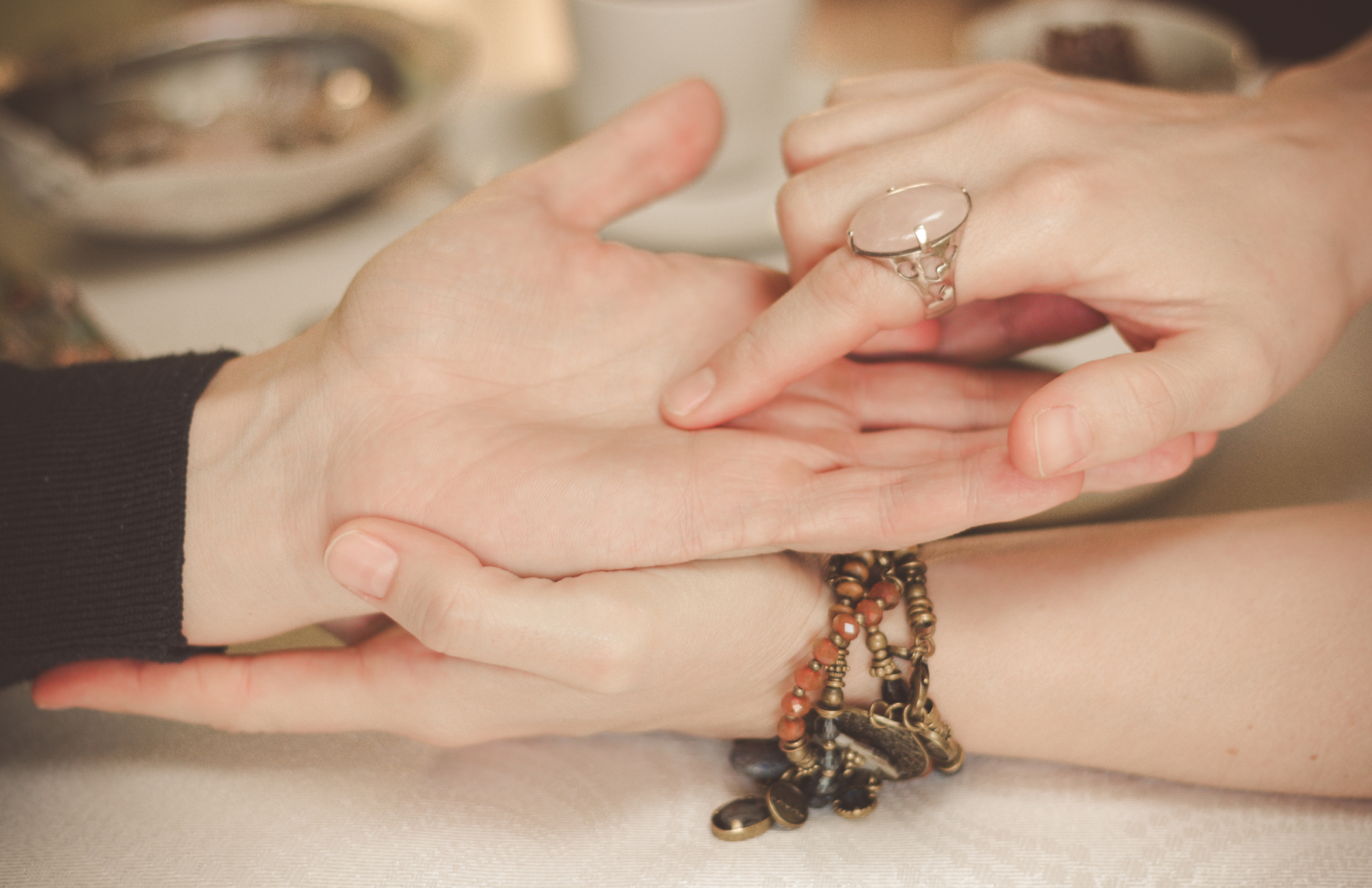
Simple palm reading concepts have captivated cultures worldwide for centuries. The practice originated in ancient India and spread to China, Persia, and Greece. Many people link palmistry with fortune-telling, yet it stands as a sophisticated system of self-discovery and personal insight.
The practice goes beyond future predictions. The Heart Line, Head Line, and Life Line reveal our emotional stability and intellectual capabilities. The Life Line doesn’t predict how long you’ll live, but shows your vitality and overall well-being.
This piece will help you learn the core concepts of palm reading. You’ll understand what your hands tell about yourself as we debunk common myths. The information serves both skeptics and curious minds with clear, practical insights.
The Science Behind Palm Lines
“The patterns of fingerprints and the fine lines on the palm are established by the fourth month of life in the womb.” — Margaret A. Menser, Researcher at Children’s Medical Research Foundation in Sydney
Palm lines begin their trip before you take your first breath. Scientists call these distinctive creases “palmar flexion creases,” which take shape during the second and third months of embryonic development. These lines are as unique as fingerprints, and research shows that similar twins show variations in their palm patterns.
How palm lines form in the womb
The palm lines’ formation follows a fascinating three-phase process. The hand’s external shape develops between weeks 6 and 10, and the thumb’s position marks the original phase. The first crease appears near the 10th week because of thumb opposition. The proximal and distal palmar creases emerge soon after.
Scientists found that there was an interesting independence between these lines and hand movements. Palm creases develop at the time of week 12 of gestation, yet fetal hand movements start at week 11.5. This discovery challenges the old belief that hand flexion creates these lines.
Your palm lines’ thickness and pattern depend on genetic inheritance and racial background. Most palms show three main creases: the distal traverse palmar crease, the proximal transverse palmar crease, and the thenar transverse crease. About 1 in 30 people have a single palmar crease instead of the usual three.
Latest research findings
New scientific investigations reveal fascinating connections between palm patterns and human development. These lines act as a “fossilized record” of early development and help us learn about future well-being. Medical researchers now know that palm-print pattern variations might signal changes during early intrauterine development.
Modern dermatoglyphics studies skin patterns to get genetic and medical insights, which differs from traditional palmistry’s character analysis. Researchers now use advanced imaging techniques to measure and analyze palm characteristics with unprecedented precision.
The principal lines remain stable throughout life, which makes them valuable for scientific study. The main palmar lines stay constant while secondary creases might change. These reliable markers have sparked growing interest in palm analysis across medical applications.
Medical professionals now use practical palm reading in diagnostics. They look at skin color and texture along with palm lines to spot circulation issues and kidney-related conditions. This scientific approach shows how ancient practices evolve into modern diagnostic tools with proper scientific backing.
Understanding the Basic Hand Shapes
The sort of thing I love about palm reading goes beyond those intricate lines on our palms. Our hands’ shapes tell us so much about who we are and what comes naturally to us.
Four elemental hand types
Each hand type links to one of four elements, showing unique traits about a person. People with fire hands have square palms and short fingers, and they’re passionate and confident. These people bubble with creative energy and often run multiple careers at once.
Earth hands look like fire hands with their square palms, but that’s where the similarity ends. You’ll notice only the major lines on these hands, and they look heavier near the wrist. People with earth hands think practically and do well in hands-on work like carpentry or music.
Air hands have square palms with long, thoughtful fingers that are often as long as or longer than their palms. These people are great analysts and really shine when they communicate.
Water hands really stand out – they have long, narrow palms and slim fingers that make a rectangle. These folks have strong intuition and feel things deeply. They naturally drift toward mystical things and love looking inside themselves.
What your finger length reveals
Your fingers’ length and position can tell you a lot about yourself. A long index finger points to natural leadership and high standards. People with short index fingers might find it hard to speak up and sometimes neglect their health.
If your middle and index fingers stay close together, you’ll likely rise to power through your drive. It also turns out that people whose ring fingers sit near their middle fingers often have an artistic side.
Here’s something interesting – if your ring finger is longer than your index finger, you’re probably great at solving problems and taking risks. These people often end up working as engineers, police officers, or in special forces.
Texture and flexibility meanings
The way your hands feel and move says a lot too. Soft, delicate skin shows refinement and sensitivity, while thick skin means you’re stubborn but easy to get along with.
How flexible your hands are relates to how adaptable your mind is. People with bendy hands usually roll with changes easily, but they might spend money without thinking. Those with firm hands take their time with feelings and finances.
Your thumb’s flexibility tells an interesting story – very flexible thumbs usually mean you’re generous, but watch out because others might take advantage of this. People who keep their hands closed while talking often find it hard to trust others or stand on their own.
The Three Main Lines Explained
The three main lines in palmistry tell us a lot about who we are and our life’s trip. These lines – the life line, head line, and heart line – create patterns that show our energy levels, thinking style, and emotional nature.
Life line location and meaning
Your life line makes a curve around your thumb’s base and runs toward your wrist. Many people think this line shows how long you’ll live, but that’s not true – it actually shows your energy and general health. A deep life line with a nice arc means you probably have lots of energy and don’t get sick easily.
The space between your thumb and life line works like your “energy storage” – more space means better health outlook. Your life line might run close to your thumb, which could mean you tire quickly and take your time with relationships.
Any breaks or circles in your life line might point to health issues or big life changes. The line has three parts – early years (near index finger), middle age (center), and later life (near wrist). Each section’s marks relate to that time in your life.
Head line insights
Right in the middle of your palm sits the head line, which shows how you think and make choices. A long, clear head line means you’re good at analysis and staying focused. The line’s length isn’t about how smart you are – it shows what interests you. Longer lines mean you like learning about many things, while shorter ones show you prefer to focus on specific areas.
Your head line’s shape tells even more:
-
A straight line means you like facts and logic
-
A curved line shows you’re creative and trust your gut
-
A split at the end, called the “writer’s fork,” suggests you have a creative mind
Heart line secrets
The heart line starts under your pinkie and flows toward your index finger. This line shows your emotional health and relationships. A deep, clear line points to stable emotions and good connections with others. Where the line ends matters too – under your index finger means you’re happy in relationships, while under your middle finger might mean you get restless.
Different heart line shapes show different emotional traits:
-
Curved lines mean you show your feelings openly
-
Straight lines suggest you’re practical about relationships
-
Split ends show a good mix of heart and head
A heart line that splits into three parts like a trident brings good fortune in both love and life. When the line sits higher on your palm near your fingers, you might keep your feelings to yourself more.
Common Palm Reading Myths Debunked
“Let us approach this study with minds filled with its seriousness, for in no other way can we fully receive its benefits; and let us put aside forever the idea that its whole object is to tell a gushing maiden of her lovers.” — William Benham, Author of The Laws of Scientific Hand Reading
People have misunderstood palm reading for generations, which clouds what this ancient practice really means. Let’s look at what palm reading actually tells us about our lives by separating myths from facts.
Life line length misconceptions
The most common myth about palm reading involves your life line’s length and how long you’ll live. Scientists who studied hands in morgues found no link between life line length and lifespan. Your life line shows your vitality, stability, and how grounded you are – that’s the real story.
A short life line doesn’t mean you’ll die young. It shows you’re independent and self-reliant. People with shorter life lines often struggle with:
-
Setting up regular routines
-
Finding a permanent home
-
Keeping their finances stable
-
Building support networks
The reality behind life line interpretation shows us how to understand your physical energy and vitality. Deep, clear lines point to good health and resilience, whatever their length. Multiple life lines mean you have lots of energy and zest for life, not multiple lives.
Fortune telling vs. character analysis
The biggest mix-up comes from people thinking palm reading works like a crystal ball. Modern palm readers focus on analyzing character traits instead of telling fortunes. This shows how palm reading has grown to be more valuable – it reveals personality traits and life patterns rather than making fixed predictions.
Today’s palm readers work with these simple principles:
-
Lines change as you grow and make different life choices
-
Both hands tell different parts of your story
-
Your palm shows possible paths, not set-in-stone outcomes
Scientific perspective shows that palm lines form before birth, so they tell us more about who you are than what will happen. Some doctors even look at hands with other tools to diagnose patients, which shows how palm reading has grown beyond fortune-telling.
The difference between old-school fortune-telling and modern palm reading becomes clear when you know that:
-
Palm lines can change in just six months as your life changes
-
Readers look at who you are right now
-
Good readers help you understand that you control your future
Palm reading won’t tell you when you’ll get married, pass exams, or win the lottery. Those kinds of predictions are just for fun, not real palm analysis. The real value lies in learning about your personality traits and areas where you can grow.
Modern palm readers see their work as a way to boost self-awareness rather than predict the future. This fits with what we know today – our choices shape our future more than any marks on our hands. Palm reading works best as a guide to help you grow, not as a fortune-telling service.
How to Start Reading Your Own Palm
Palm reading needs minimal tools but demands close attention to detail. Let’s look at what you need to start understanding the stories your hands tell.
Simple tools needed
Palm reading’s beauty lies in its simplicity – you don’t need costly equipment to start. A bright light source helps you get into lines clearly, especially during detailed readings. Baby powder can emphasize subtle markings to boost visibility. On top of that, a palmistry journal helps you track how your palm lines change over time.
Step-by-step guide
Your hands tell different stories. Your dominant hand shows your present and future path, while your non-dominant hand reveals inherent traits and potential.
These steps will give you the right start:
-
Clean your hands really well to create a clear canvas
-
Cup your palm slightly under bright light to see lines better
-
Look at the bigger picture before diving into details
-
Get into the texture – feel if the palm is smooth, rough, moist, or dry
-
Check the fingers’ condition – are they well-kept or show signs of work?
Common beginner mistakes
New palm readers often can’t tell the difference between dominant and non-dominant hands. The non-dominant hand, what we call the ‘passive’ or ‘inner’ hand, matters a lot since it shows innate traits.
People often miss these things:
-
Hand size and general form
-
Right finger proportions
-
Taking time with first observations
-
Making wild predictions
Note that palm lines shift with time as lifestyle and health conditions change. See readings as snapshots of current potential rather than set predictions. Practice with family and friends will sharpen your interpretation skills. Trust your gut while keeping a balanced viewpoint – palm reading helps you discover yourself rather than tell fortunes.
Conclusion
Palm reading is a fascinating link between ancient wisdom and modern self-discovery. Many people dismiss it as fortune-telling, but scientific research shows our palms have real biological significance. These unique patterns actually develop before we are born.
Palm reading doesn’t predict specific events but gives us a window into our character, potential, and natural tendencies. Each of the three main lines tells a different story. The life line reveals vitality, the head line shows intellectual capacity, and the heart line reflects emotional depth. When combined with hand shapes and textures, these lines paint a complete picture of who we are.
The simple knowledge of palm reading helps us recognize our strengths and areas where we can grow. Our lines might change slightly as time passes and reflect our life choices. They remain reliable indicators of our core traits. This knowledge lets us make better choices about our future path, and palm reading becomes one of many useful tools to develop ourselves.
FAQs
Q1. Is palm reading scientifically proven? While palm reading isn’t considered a scientific discipline, research has shown that palm lines form during fetal development and can provide insights into early developmental patterns. However, the interpretation of these lines for personality traits or future predictions lacks scientific validation.
Q2. Can palm lines change over time? Yes, palm lines can change subtly over time. These changes often reflect significant life events, personal growth, or shifts in health conditions. However, the main lines (life, head, and heart) tend to remain relatively stable throughout one’s life.
Q3. What does the length of the life line actually indicate? Contrary to popular belief, the length of the life line doesn’t predict lifespan. Instead, it indicates vitality, overall well-being, and one’s sense of stability. A shorter life line may suggest independence and self-reliance rather than a shorter life.
Q4. How can I start reading my own palm? To begin reading your own palm, start by examining both hands under good lighting. Focus on the three main lines (life, head, and heart) and observe their depth, length, and curvature. Pay attention to hand shape and texture as well. Remember to approach it as a tool for self-discovery rather than fortune-telling.
Q5. What are the four basic hand shapes in palm reading? Palm reading recognizes four elemental hand types: fire (square palms with short fingers), earth (square palms with thick or coarse skin), air (square palms with long fingers), and water (long, narrow palms with long, flexible fingers). Each type is associated with different personality traits and natural inclinations.
Leave a Reply