
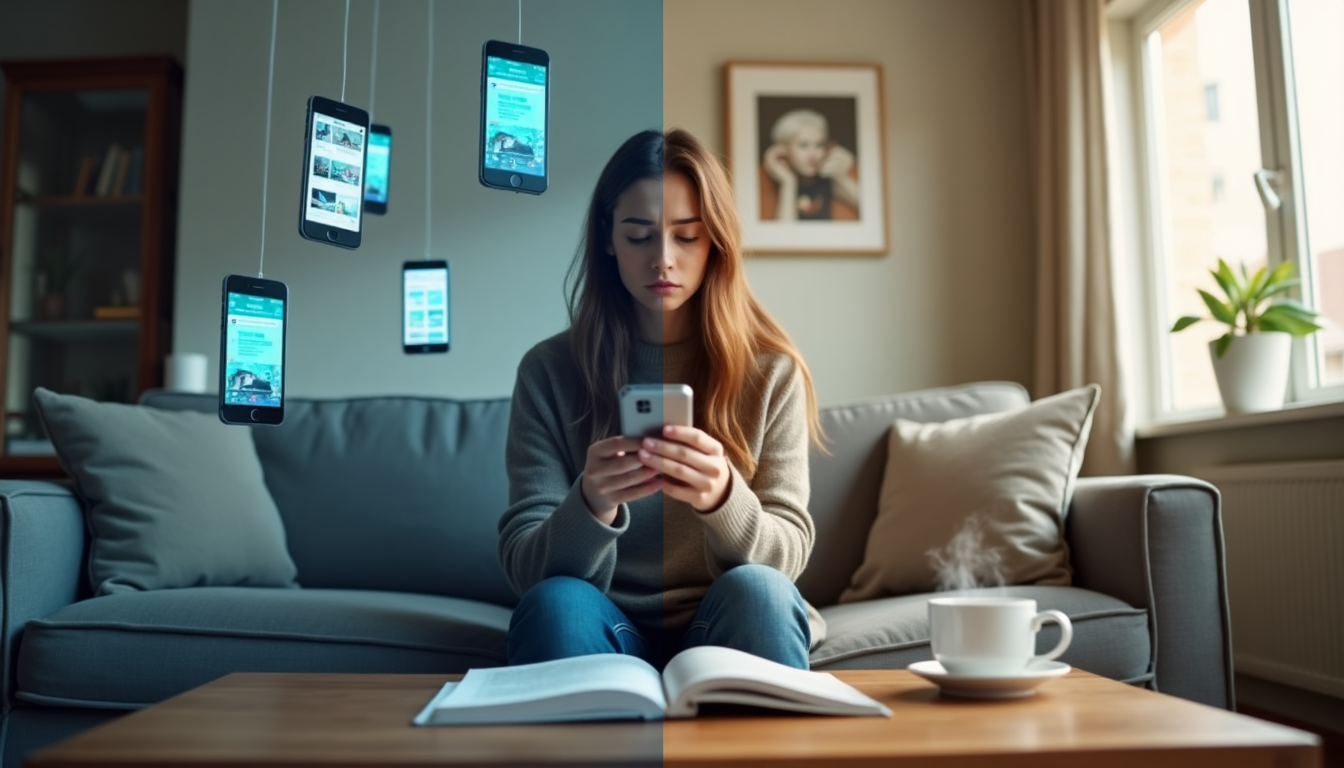
“Comparison is the thief of joy,” Theodore Roosevelt once said. These words echo even more at the time we try to direct our way through our hyper-connected world. A 2014 study showed that college students’ self-esteem dropped by a lot after they compared themselves to others on social media.
The trends look concerning, especially when you have teenage girls. Their depression rates have climbed to 23% while boys stand at 8.8%. Many of us can’t help but compare ourselves to others – that’s no surprise. Social media shows a carefully groomed story that barely matches reality. People choose to showcase their best moments and hide their struggles. This creates an unrealistic benchmark that can leave us feeling hopeless.
This piece offers practical strategies to help you break free from the comparison trap. You’ll learn ways to rebuild your self-worth and develop healthier social media habits. The steps here will guide you to focus on your own path, whether you battle constant comparisons or just want to boost your self-esteem.
Why We Compare Ourselves to Others
“Don’t compare yourself to others. There’s no comparison between the sun and the moon. They shine when it’s their time.” — Unknown, Not specified
People have a basic need to learn about themselves and their place among others. This drives social comparison. Research shows that we spend about 10% of our daily thoughts comparing ourselves to others. This natural tendency is the life-blood of how we think and interact socially. It helps us make quick judgments and save mental energy.
The psychology behind comparison
Our brains naturally involve two different types of social comparisons. We look up to people we notice as better than us (upward comparisons), and we look at those we think are worse off (downward comparisons). People tend to look up more often than down, which guides them toward feeling not good enough.
The theory behind social comparison tells us that we review ourselves through three main drives: self-evaluation, self-improvement, and self-enhancement. All the same, these comparisons don’t always help us. Studies show that looking up to others often hurts us mentally. It can lower our self-esteem and make us more depressed.
How social media amplifies comparison
Social media platforms have made our urge to compare ourselves much stronger. Research shows that comparing ourselves on these platforms directly relates to feeling more depressed and anxious. This happens because users show perfect versions of themselves with filters and edited photos.
Young people who see this carefully selected content often think others live better lives. This makes them more likely to feel bad about themselves. A review of 70 published studies proved that comparing ourselves on social media consistently relates to higher levels of depression and anxiety.
Common comparison triggers
Several things set off our need to compare. Studies show we compare ourselves more when something really matters to us. To name just one example, if you care more about grades than sports, you’ll likely compare your test scores rather than your athletic skills.
Social media’s focus on images creates the perfect storm for appearance comparisons. A review of 156 studies found that comparison relates by a lot to body image issues, especially in women and younger people. There’s another reason – the way social media counts likes and comments gives us a clear way to measure our social status, which makes us compare even more.
Knowing what triggers these comparisons helps explain our constant need to measure up to others. Our natural desire to compare ourselves, powered by social media’s endless stream of perfect content, creates a cycle that’s hard to break. All the same, seeing these patterns is our first step toward building healthier ways to value ourselves.
Signs You’re Stuck in the Comparison Trap
You can break free from unhealthy comparison by spotting its warning signs early. Studies show that when we constantly compare ourselves to others, it creates a cycle of negative emotions that affects our mental and physical health.
Physical symptoms of comparison anxiety
Your body releases stress hormones like cortisol and adrenaline when you’re stuck in chronic comparison. These hormonal changes show up as several physical symptoms:
-
Headaches and muscle tension, especially in your neck and shoulders
-
Stomach pain, nausea, and other digestive problems
-
Changes in sleep patterns, from not sleeping enough to sleeping too much
-
Racing heart or increased heart rate
-
Feeling tired and weak without any clear reason
The research is clear – when you face comparison-related stress for long periods, your immune system takes a hit and you become more likely to get sick. Of course, these physical symptoms often get worse when you spend more time on social media.
Behavioral changes to watch for
People caught in comparison cycles show specific behavioral patterns. One study found that comparing yourself too much on Instagram relates directly to higher levels of depression. Here are the key behaviors you should watch out for:
-
Social Media Habits: You spend too much time looking at others’ profiles and checking your likes and comments
-
Relationship Changes: You drift away from friends because you feel jealous or not good enough
-
Self-Worth Fluctuations: Your happiness depends on how your life matches up to others
-
Productivity Impact: Your work suffers because you’re too focused on what others achieve
People dealing with comparison stress often become perfectionists. They work longer hours and take on extra work to meet standards they think others expect. Research shows this intense drive usually ends in burnout as people try to meet impossible expectations.
The studies also show that people trapped in these comparison cycles often skip their self-care routines, which risks their physical health. In fact, handling criticism becomes harder as people take even helpful feedback too personally.
Breaking Free from Social Media Comparison
“We are living in an attention economy and social media is addictive by design.” — Tristan Harris, Former Google design ethicist and co-founder of the Center for Humane Technology
Breaking free from the endless cycle of social media comparison needs intentional action and mindful choices. Research shows that too much time on social platforms links to increased feelings of sadness, dissatisfaction, and frustration.
Setting healthy social media boundaries
Proper time management is the life-blood of healthy social media use. Research shows that using specific screen time limits substantially reduces comparison-induced anxiety. Here’s what I suggest:
-
Set designated hours for social media usage
-
Use built-in app timers to track daily usage
-
Make “phone-free” zones during meals and social gatherings
Creating a positive digital environment
A nurturing online space needs careful curation of your digital footprint. Studies show that mindful social media involvement can improve optimism and positive self-image. You can foster this environment if you:
-
Stay analytical about the content you consume
-
Assess information sources before sharing
-
Put meaningful connections ahead of superficial interactions
Research shows that cutting back on social media can decrease feelings of loneliness and isolation. You should think about scheduling regular digital detoxes to reset your relationship with social platforms.
Unfollowing without guilt
Many users hesitate to unfollow accounts that trigger negative emotions because they fear social consequences. Studies confirm that cleaning out your friend list can positively affect mental health. When unfollowing:
-
Keep explanations brief if asked
-
Note that you’re not obligated to follow anyone
-
Pick accounts that inspire and uplift
Research backs that following accounts that match your values creates more meaningful interactions. Your social media experience should reflect your authentic interests and support your well-being.
The “create before consume” principle can work wonders. This approach limits comparison by encouraging original content creation before you look at others’ posts. These strategic changes can reshape your social media experience from a source of comparison to a tool for genuine connection and personal growth.
Building Your Comparison-Free Zone
Your journey toward a life free from constant comparison begins when you redefine success on your own terms. Research shows that personal achievement measures substantially change how people view and experience success.
Developing personal success metrics
Rather than comparing yourself to others, you should create your own measures of success. Simple, clear metrics help you focus on what truly matters in life. Here’s how to create meaningful personal metrics:
-
Identify core values that matter most to you
-
Establish 5-6 measurable indicators that match these values
-
Create a tracking system to monitor progress
-
Review achievements regularly
Research proves that defining your own success measures builds self-awareness and helps prevent burnout. The importance of tracking rest and recovery matches that of monitoring achievements.
Creating daily affirmation practices
Affirmations help rewire negative thought patterns effectively. Studies show that regular affirmation practices protect against negativity and build self-confidence.
These steps will help you maximize your daily affirmations:
-
Choose statements that feel genuine and achievable
-
Practice them during morning routines
-
Place visual reminders in spaces you visit often
-
Combine them with mindfulness exercises
Research confirms that affirmations release feel-good hormones, as with exercise. Regular affirmation practices also reduce stress levels in the body.
Success depends on consistency and authenticity. Studies suggest that repeating affirmations throughout the day produces better results. A quiet environment allows these positive statements to settle deeply into your consciousness.
Personal growth doesn’t follow a straight line. Research shows that development happens in cycles – periods of growth followed by integration phases. Patience and consistent practice turn these tools into powerful allies. They help build a life focused on personal growth rather than seeking validation from others.
Conclusion
Breaking free from comparison needs time and dedication, but the rewards make it all worthwhile. Studies show that endless comparison, especially on social media, hurts our mental health and self-worth.
Life becomes more about achieving success through personal growth than comparing ourselves to others’ highlight reels. A strong foundation for lasting change comes from setting healthy boundaries with social media, creating personal metrics, and practicing daily affirmations.
Your experience is unique – no two paths to success look similar. You should focus on writing your own story while others post their victories online. Simple actions like unfollowing triggering accounts or taking regular digital detoxes lead to most important positive changes over time.
Be patient with yourself during this process. Some days will feel easier than others, but each step away from comparison brings you closer to authentic self-acceptance. The only person you need to outperform is who you were yesterday.
FAQs
Q1. How can I stop comparing myself to others on social media? Limit your time on social platforms, curate your feed to focus on positive content, and remember that most people only share their highlights online. Consider taking regular breaks from social media to reset your perspective.
Q2. What are some strategies to build self-confidence and reduce comparison? Focus on personal growth by setting achievable goals, practicing daily affirmations, and celebrating your own progress. Develop metrics for success based on your values rather than external standards.
Q3. How does constant comparison affect mental health? Frequent comparison can lead to increased anxiety, depression, and lowered self-esteem. It may also cause physical symptoms like headaches, sleep disturbances, and digestive issues due to stress.
Q4. Is it normal to compare myself to others? Yes, it’s a common human tendency. However, excessive comparison can be detrimental. Try to redirect your focus to your own growth and accomplishments rather than measuring yourself against others.
Q5. How can I turn comparison into motivation instead of discouragement? Use comparison as inspiration for self-improvement rather than self-criticism. Set personal goals based on others’ achievements that interest you, but focus on your own progress and celebrate your unique journey.
Leave a Reply