
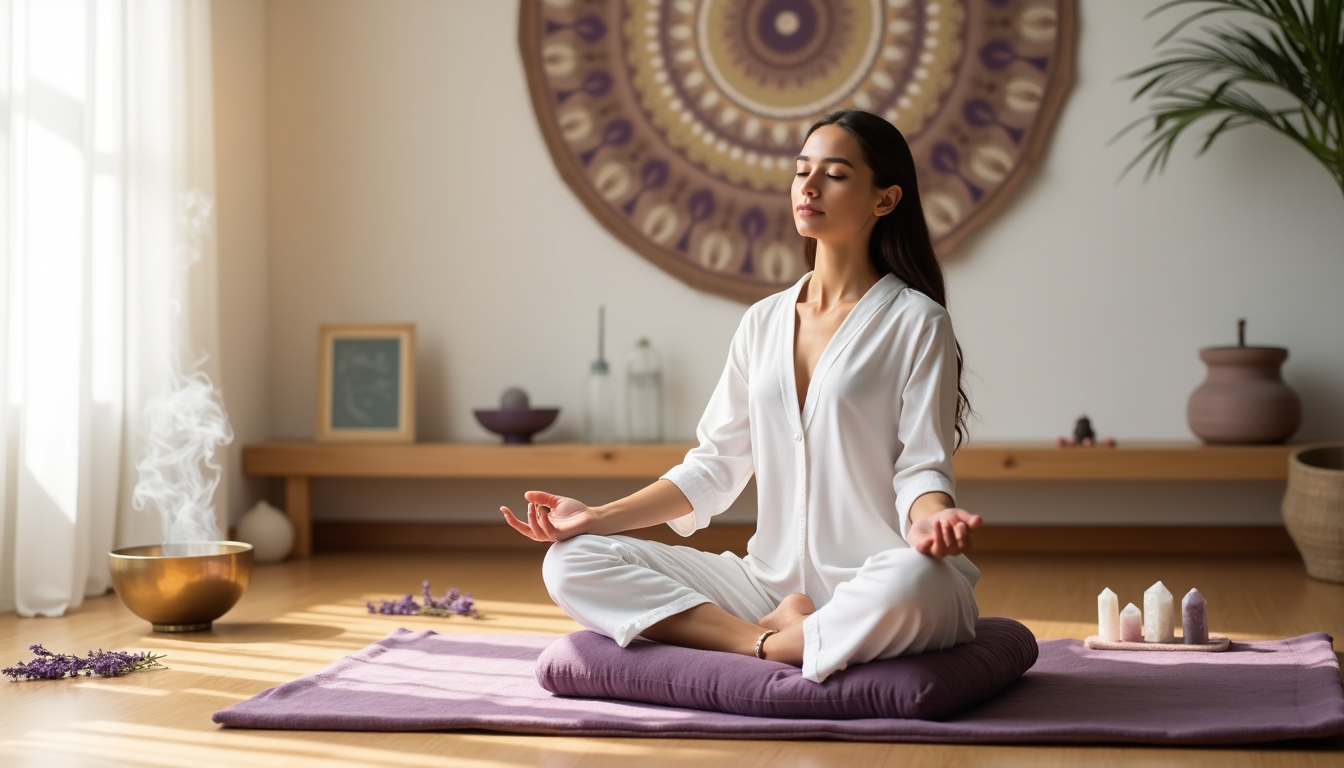
Did you know that 95% of our daily behaviors run on autopilot? Most of us live life on “fast brain” mode. We barely notice our thoughts, actions or the energy flowing through us.
Mindfulness techniques offer a powerful solution. Scientific studies prove that mindfulness practices can substantially reduce stress levels. These practices boost concentration and help us experience life with intention. Energy healing techniques work alongside mindfulness. They restore balance to our body’s energetic system and release emotional and physical tension.
We created this detailed guide for beginners. You might be dealing with anxiety, looking for inner peace, or wanting to break free from autopilot mode. Our guide shows you the exact steps to begin your mindfulness experience. We cover everything from basic breathing exercises to powerful energy healing methods like tapping and visualization.
Want to revolutionize your daily life with mindfulness? Let’s begin.
Understanding Mindfulness and Energy Healing
Mindfulness and energy healing are two powerful ways to achieve comprehensive wellbeing. These practices have different origins but share amazing benefits that work well together. Let’s learn about these practices and see how they combine to promote healing.
What is Mindfulness?
Mindfulness shows us how to be fully present and aware of our surroundings without feeling overwhelmed by what’s happening around us. We don’t need to create it—every human already has this quality that just needs to be fostered.
The heart of mindfulness lies in staying aware of our thoughts, feelings, body sensations, and environment through a gentle, nurturing perspective. This practice teaches us to accept and pay attention to our thoughts and feelings without labeling them right or wrong.
Buddhist traditions gave birth to mindfulness, but secular practices have become prominent. Jon Kabat-Zinn’s Mindfulness-Based Stress Reduction (MBSR) program launched in 1979 made this possible. The last several years have produced thousands of studies that show physical and mental health benefits from regular mindfulness practice:
- Lower depression, stress, and anxiety
- Better performance and concentration
- Deeper self-awareness and emotional control
- Better responses to situations instead of reactions
Mindfulness helps by moving your focus to the present moment away from worried thoughts. This creates space between you and your automatic reactions.
The Science Behind Energy Healing
Energy healing builds on the idea that an energy field pervades the human body and affects our health—people call it subtle energy, vibrational energy, or life force. Complementary and alternative medicine believes physical and mental health issues arise when this energy gets stuck or unbalanced.
Scientists continue to understand energy healing better each day. Research reveals that our bodies have biofields—electromagnetic fields that surround and interpenetrate the physical body. Studies also show we can detect and influence these energy fields. To name just one example, see Dr. Popp’s research that showed how a plant’s entire biofield changed when it got hurt.
Scientists now study how these subtle energies affect our wellbeing. Energy medicine goes beyond the biochemical model. It includes electromagnetic and quantum processes that nature uses to organize itself. The human energy field (HEF) forms the foundations for understanding integral physiology, which brings together body, mind, and spirit rather than treating symptoms in isolation.
How Mindfulness and Energy Healing Connect
Mindfulness and energy healing work together perfectly. Mindfulness techniques turn on the parasympathetic nervous system. This helps people relax, slow their heart rate and breathing, calm strong emotions, and control their emotional state. Energy healing wants to restore balance to the body’s energy systems, which supports physical, mental, and emotional wellbeing.
These practices connect through their focus on presence and awareness. Practitioners describe energy healing as a conversation. They slow down to listen to themselves and find what blocks their vitality. This mindful attention lets healing energy flow more freely.
On top of that, both approaches recognize the mind-body connection. Research shows our thoughts, feelings, and perceptions can deeply affect our physical health. They can either boost or suppress our immune system. Therefore, mindfulness practices create the right mental state that supports energy healing by calming the mind and opening awareness to subtle energetic changes.
These complementary practices are a great way to get wellness benefits that address both mental and energetic aspects of health.
Creating Your Mindfulness Practice Foundation
Building a strong foundation for your mindfulness practice goes beyond learning techniques. You need the right environment and routine to support your experience. Studies show mindfulness practice becomes second nature after six months of regular practice. Let me help you build this foundation step by step.
Setting Up Your Sacred Space
A dedicated area for mindfulness practice creates a visual and sensory reminder to pause and be present. Your sacred space acts as a physical anchor. It builds energy over time as you return to it for your practice.
Pick a specific spot in your home—a quiet corner, empty wall, small nook, or even a dedicated room if you have one. You don’t need much space. A small tabletop or cushion can become a meaningful sanctuary. The key lies in using the same location every time.
Clean the area both physically and energetically before setting up:
- Sweep floors and wipe surfaces
- Clear the energy using sage, Palo Santo wood, or essential oil spray
- Open windows to allow fresh air and stagnant energy to flow out
- Set a clear intention for your space
Your sacred space should appeal to all your senses. Think about what helps you feel calm, comforted, and peaceful. Add elements like crystals, meaningful objects, fresh flowers, or a small plant. The process of arranging becomes a mindfulness practice as you place each item with intention.
The Right Time to Practice
Consistency matters more than perfection when you establish your mindfulness practice. Research shows early morning practice works best for many people, especially when it happens before daily activities begin. This aligns with sunrise—a natural still point in the 24-hour energy cycle.
Other good times include:
- Between 5-8 am or 10 am-1 pm
- Between 5-8 pm or 10 pm-1 am
- Around sunset, which offers another natural energy transition point
Yogananda marked these periods as times when “all the laws of attraction and repulsion which cover the body are more harmonious.” This makes it easier to withdraw attention from sensory distractions.
Beginners should start small. Even 10-15 minutes daily can bring benefits. Regular short sessions work better than occasional long ones. Make sure you practice on an empty stomach (wait at least an hour after eating) and when you’re alert enough to stay focused without falling asleep.
Essential Tools for Beginners
Mindfulness needs no special equipment, but certain tools can boost your practice by a lot:
Meditation Support: A cushion (zafu) or comfortable chair helps maintain proper posture during longer sessions.
Cleansing Tools: White sage or Palo Santo for smoke cleansing, or essential oil sprays (particularly sage, lavender, or citrus) offer smoke-free alternatives.
Sound Elements: Singing bowls, soft bells, or carefully chosen music mark the beginning and end of practice or support specific meditations.
Visual Anchors: Candles provide gentle light and a focus point. Lighting a candle becomes a symbolic ritual that marks your transition into mindfulness time.
Digital Assistants: Apps like Headspace give you guided meditations, while timer apps help maintain consistency without clock-watching.
Nature Elements: Fresh flowers, small plants, or natural objects connect your practice to the living world and add vitality to your space.
Note that these tools should serve your practice—not the other way around. Start with what feels essential and let your toolkit grow naturally as your practice deepens.
Basic Mindfulness Exercises for Energy Awareness
Knowing how to use basic mindfulness techniques opens the door to energy awareness. These simple yet powerful exercises help you become more sensitive to the energy that flows within and around you. Here are four significant practices to start your experience.
Mindful Breathing Techniques
Your breath is the most available anchor to the present moment that directly affects your energy levels. Start with deep belly breathing by placing one hand on your belly and one on your heart. Take deep breaths from the bottom of your belly and notice how it expands. Then exhale completely and feel the release as your belly falls. This diaphragmatic breathing creates longer, deeper breaths that activate your parasympathetic nervous system.
To boost your energy awareness, try Breath Focus: pick a word that makes you feel relaxed (like “peace”) and repeat it while inhaling. Then picture yourself letting go of tension with each exhale (mentally saying “releasing tension”). Note that good posture plays a vital role—sit upright so your diaphragm and lungs can move freely.
Body Scan Meditation
The body scan helps you develop energy awareness by directing your attention through different body regions. Get comfortable either lying down or sitting. Take several deep breaths, then:
- Start at either your head or feet and move through your body step by step
- Notice any sensations—tingling, pressure, temperature changes—without judgment
- Break down each sensation before moving to the next area
- Your mind will wander (that’s normal), just guide it back to your exploration
This practice helps you recognize where energy might be stuck or flowing freely in your body. Students who keep doing body scans report better mindfulness and psychological well-being.
Grounding Visualization Exercise
Grounding connects you to earth energy and keeps you present. This practice becomes especially valuable during anxiety or when you feel scattered energetically. Sit with your feet planted firmly on the ground. Close your eyes and picture roots growing from your spine’s base, through your feet, deep into the earth.
Next, imagine pulling earth energy up through these roots into your body. Picture this energy flowing up your spine, through your heart, and out through your head’s crown. This exercise centers you and creates energetic balance.
Walking Meditation for Energy Flow
Walking meditation blends physical movement with present-moment awareness—perfect for experiencing energy flow. Unlike regular walking, move slowly and think over each step. Focus on the sensations of movement. Feel each part of your step—lifting, moving, and placing each foot.
Let your awareness expand to include energy flowing through your whole body. Notice how your body constantly balances and rebalances, creating natural energy circulation. This practice works best when you feel restless or find sitting meditation challenging.
Intermediate Energy Healing Techniques
You’re ready to explore sophisticated energy healing techniques after becoming skilled at simple mindfulness exercises. These intermediate practices connect you deeply to subtle energies and are a great way to get tools for self-healing.
Chakra Balancing for Beginners
Chakras are energy centers in the body that link to specific organs and emotional states. Seven major chakras run from the base of your spine to the top of your head. These energy wheels promote optimal wellness and unlock higher states of being when balanced.
Starting from the ground up works best for chakra balancing. Find a quiet space where no one will disturb you. Sit comfortably, keep your spine straight and close your eyes. Picture each chakra as a spinning wheel of light in its color – from root (red) to crown (violet).
Focus on one chakra at a time to balance effectively. Breathe deeply into the area while you visualize its color becoming brighter and clearer. You might feel tingling, warmth, or subtle pressure – signs that energy is moving.
Self-Reiki Basics
Self-Reiki, a Japanese energy healing technique, balances your energy and improves wellbeing. This simple practice brings notable benefits like better sleep, less stress, and improved emotional balance.
To practice self-Reiki:
- Create a peaceful environment with soft lighting
- Set a clear intention for your healing session
- Begin by placing your hands on or just above your head
- Move systematically through positions including face, throat, heart, solar plexus, abdomen, and hips
- Hold each position for 3-5 minutes, letting energy flow
Consistency makes self-Reiki work best. Just 15-30 minutes daily can create powerful changes. Reiki energy flows through your entire being whatever hand position you choose.
Emotional Freedom Technique (Tapping)
EFT blends cognitive therapy elements with acupressure by tapping on specific meridian points. This method balances your energy system and eases emotional distress.
To perform basic EFT:
- Identify a specific issue bothering you
- Rate its intensity from 0-10
- Create a setup phrase like “Even though I feel anxious, I deeply accept myself”
- Tap the side of your hand (karate chop point) while repeating this phrase three times
- Tap seven times on each remaining point: eyebrow, side of eye, under eye, under nose, chin, collarbone, and under arm
- Complete by tapping the top of your head
- Reassess your intensity level and repeat if needed
EFT works especially well for anxiety, stress, and emotional blocks. Studies suggest it might help conditions like PTSD through its unique blend of physical stimulation and mindful awareness.
Advanced Mindfulness Practices for Energy Transformation
Your mindfulness trip deepens as you develop a refined sense to feel and reshape energy. These advanced practices build on your foundation and create profound energy changes within and around you.
Working with Crystals and Intentions
Crystals act as powerful allies in energy work because they maintain stable vibrational frequencies that help balance your own energy. Pick crystals that naturally draw you in. Clear quartz acts as a versatile amplifier for intentions, while amethyst supports mental clarity and deep meditation.
To meditate with crystals:
- Hold your chosen crystal in your right hand (the traditionally receptive hand)
- Set a clear intention such as “I welcome clarity and peace into my mind”
- Place the crystal on corresponding chakra points or hold it during meditation
- See your intention flow through the crystal and into your energy field
Your crystals need regular cleansing. You can place them on selenite plates or under moonlight to refresh their energies.
Sound Healing Meditation
Sound healing employs specific vibrations that balance your energy centers and create deep relaxation. Crystal singing bowls produce vibrational frequencies that reach through skin, fluid, and bones to recalibrate your entire body at the cellular level.
These frequencies help your brainwaves shift from high-stress beta states to relaxed alpha and theta states. Your body finds its natural resonance, and all systems return to harmony.
You can create your own sound healing practice by:
- Playing recorded singing bowl sounds or tuning forks at specific frequencies
- Focusing on vibrations moving through your body
- Letting sounds guide you into deeper meditative states
- Mixing sound with mindful breathing to improve effects
Energy Field Cleansing Ritual
Daily interactions leave residual energies in your energy field that affect your wellbeing. Regular cleansing rituals help maintain your energetic boundaries and vitality.
The “Return to Sender” visualization works well. You can close your eyes, breathe deeply, and see yourself surrounded by golden light. Say mentally: “I lovingly return all energy that doesn’t belong to me back to its original source with love and healing”.
You might also create an energetic shield. Picture protective light around your body each morning. Quick visualizations throughout the day can refresh this shield while you affirm “I am safe, grounded, and protected”.
Conclusion
Mindfulness and energy healing are powerful ways to achieve better wellbeing and deeper self-awareness. These techniques will help you become more sensitive to energy flows and build resilience against daily stress.
Your progress should begin with simple breathing exercises. Body scans and chakra work can follow naturally at a comfortable pace. This trip is unique to you – some techniques will strike a chord more than others, and that’s completely fine.
Regular practice matters more than perfection. You only need 10-15 minutes each day to create meaningful changes in your energy awareness and overall wellbeing. Different methods will work better for your personal growth as you learn these practices.
Listen to your intuition and stay committed. These ancient wisdom traditions will help you live with greater peace, balance, and energetic harmony.
FAQs
Q1. What are the key components of mindfulness practice? The key components of mindfulness practice include curiosity, compassion, and maintaining a calm center. These elements help you stay present, non-judgmental, and balanced in your approach to mindfulness exercises.
Q2. How can I begin healing my energy body? To start healing your energy body, try incorporating practices such as breathwork, meditation, chakra balancing, and spending time in nature. These techniques can help promote overall vitality and restore balance to your energy systems.
Q3. What’s the best way to develop a consistent mindfulness routine? To develop a consistent mindfulness routine, start with short daily sessions of 10-15 minutes. Choose a quiet space and a specific time each day for practice. Gradually increase the duration as you become more comfortable with the techniques.
Q4. Can mindfulness practices improve physical health? Yes, mindfulness practices can positively impact physical health. Research suggests that regular mindfulness practice can help reduce anxiety, lower blood pressure, improve sleep quality, and even assist in pain management.
Q5. What are some advanced techniques for energy transformation? Advanced techniques for energy transformation include working with crystals and intentions, practicing sound healing meditation, and performing energy field cleansing rituals. These methods can help you deepen your energy awareness and create profound energetic shifts.
Leave a Reply