
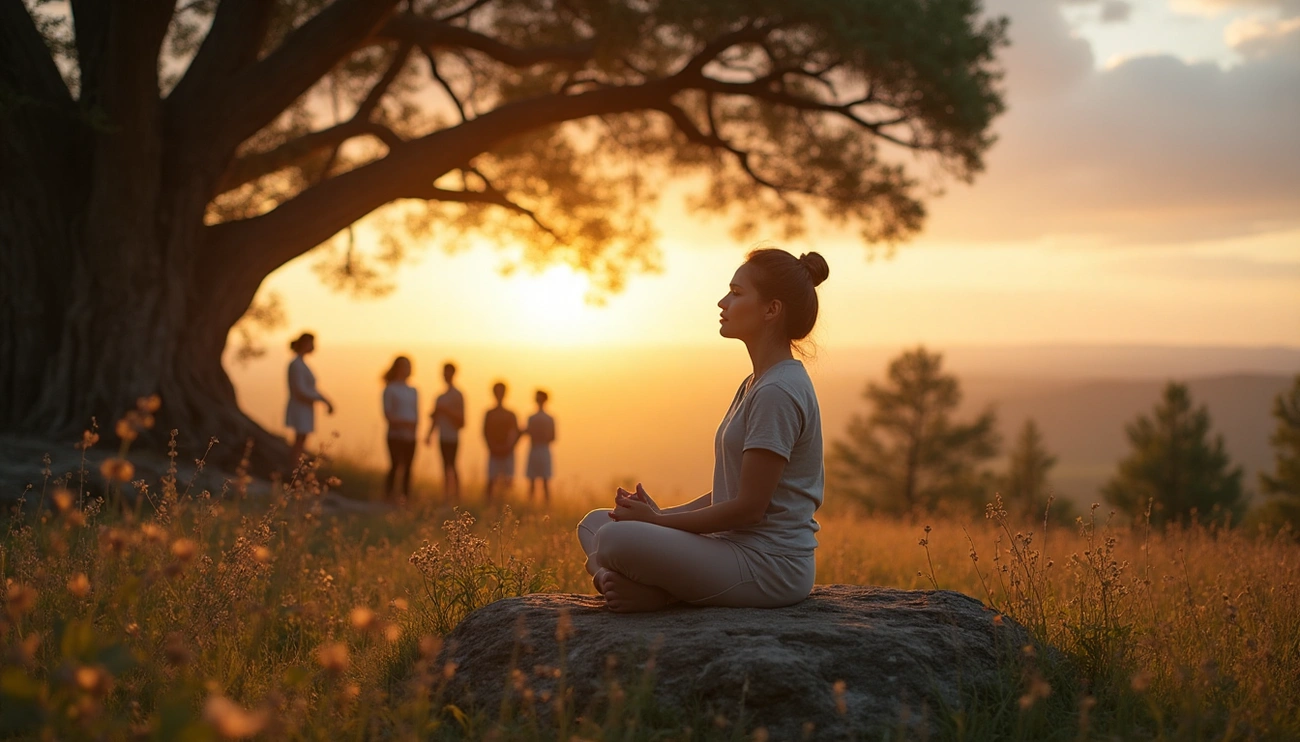
Young gurus and “spirit junkies” have sparked a fresh wave of interest in spiritual practices, making them trendy once again. The real question is: what does being spiritual mean in today’s world? The MIDUS study reveals something fascinating – 79% of people say they’re spiritual, and almost half rate spirituality as crucial in their lives. Yet only a third show up for weekly religious services.
Spirituality reaches beyond traditional religious boundaries. Research points to “Connectedness” as its essence – that feeling of being linked to something bigger through our relationship with ourselves, others, nature, and whatever lies beyond. Science and spirituality aren’t rivals as many might think. Research shows that spiritual experiences can actually change our brain chemistry, boosting serotonin levels. The brain’s default mode network quiets down during meditation, which creates that same “flow state” both spiritual seekers and artists know so well.
As I wrote in this piece, you’ll find a science-backed definition of spirituality that might catch you off guard. We’ll get into its four key aspects and see how these spiritual practices affect our well-being from a scientific viewpoint.
What is Spirituality? A Modern, Research-Based Definition
“We can no more do without spirituality than we can do without food, shelter, or clothing.” — Ernest Holmes, Founder of Religious Science movement and author
Researchers face a tough challenge when they try to define spirituality because it covers such a broad range of human experiences. A look at scholarly literature shows “little agreement” among twenty-seven different definitions [1]. Notwithstanding that, modern research points to some common themes.
Spirituality vs. Religion: Key Differences
Spirituality and religion used to mean the same thing, but now they stand for different aspects of human life. Religion refers to “an organized system of beliefs, practices, rituals, and symbols” [2]. Spirituality, on the other hand, means “the search for the sacred” [2] or “a personal quest for understanding answers to ultimate questions about life” [3].
The main difference shows up in how they work and what they do. Religion does more than just connect people with the sacred – it serves social and psychological needs too. Spirituality aims to connect with the sacred [2]. Religion needs established institutions, while spirituality works both inside and outside traditional systems [2].
The rise of ‘spiritual but not religious‘
The “spiritual but not religious” (SBNR) group has grown by a lot. They now make up about 22% of Americans [4]. These people value spirituality but don’t connect with organized religion. About 58% call themselves religious (most feel spiritual too), while 21% say they’re neither religious nor spiritual [4].
SBNR folks tend to be younger and lean Democratic. They rarely go to religious services – just 2% show up weekly [3]. Even though they don’t like the “religious” label, 45% still have some connection to a religion [4]. This shows people’s complex relationship with faith traditions.
Why defining spirituality is so complex
Several factors make spirituality hard to pin down. People see it more as a personal experience now, rather than following specific religious rules [5]. Modern spirituality also mixes different ideas from humanistic psychology, mystical practices, and Eastern religions [5].
Researchers agree on some basic parts of spirituality. These include feeling connected (to yourself, others, nature, or something bigger), finding meaning in life, and having experiences that surpass the ordinary [6]. Many “spiritual” Americans say everything in spirituality includes “being connected with something bigger than myself” (74%), “being connected with God” (70%), and “being connected with my true self” (64%) [3].
The Four Dimensions of Spiritual Connectedness
Research shows that spiritual connectedness happens through four different but connected dimensions. These dimensions are the basic ways people find spiritual meaning in their lives.
1. Connection to Self
A connection to self builds the foundation for spiritual growth. This dimension helps us develop inner resources to exceed difficulties and participate fully in life’s spiritual aspects [7]. People who connect with themselves start a journey of self-compassion, curiosity, and acceptance [8]. Our intuition works as an internal alarm system that guides us through life. Nothing speaks truth more clearly than what lives in our soul [8]. People who cultivate self-connection honor their authentic selves instead of following external expectations. This helps them live their truth and reach their highest potential [9].
2. Connection to Others and Community
Spiritual development happens naturally in community settings [7]. People thrive as social beings when they build meaningful relationships with family, friends, and their broader community [10]. Communities give people a sense of belonging and acceptance. They create supportive environments where everyone can express themselves without judgment [11]. Research shows that unity in communities helps build relationships based on trust, respect, and genuine care [11]. These connections create safe spaces for personal growth and transformation that address our basic human need to belong [12].
3. Connection to Nature and Environment
Nature helps many people connect to the sacred [13]. This dimension shows how natural environments—mountains, lakes, forests—often create a sense of divine presence or inspire awe [13]. Studies indicate that spiritual connections to nature benefit both our planet and ourselves [14]. Ecospirituality encourages gratitude and helps reduce stress while improving mental health [14]. Time in natural settings recharges us completely. Nature works as a direct channel to spiritual energy [9].
4. Connection to the Transcendent or Greater Whole
This dimension helps us see ourselves beyond our individual ego [15]. Reed describes this as “expansion of self-conceptual boundaries multidimensionally.” It includes transpersonal expansion where people connect “with dimensions beyond the typically discernible world” [16]. These experiences move us past self-interest toward something greater and give us a deeper sense of purpose [17]. A transcendent connection helps us feel part of a larger, universal whole. We experience the same energy flowing through all living beings while expressing it uniquely [18].
How Spirituality Impacts Well-Being and Mental Health
“expanding a sense of purpose and meaning in life” — Policy Research Associates, Research organization focused on behavioral health
Research shows that spirituality plays a powerful role in improving human health outcomes. Spiritual practices do more than just provide comfort – they make measurable contributions to physical and psychological resilience. Studies consistently reveal that spirituality guides people through life’s challenges and helps them stay healthy [2].
Spirituality and emotional resilience
Spiritual resilience reflects how well we maintain our sense of self and purpose through beliefs, principles, or values when facing adversity. People develop this ability by using both internal and external spiritual resources [19]. Spirituality acts as a shield against life-related stress, especially when you have challenging circumstances [19].
People with deep spiritual roots show they can better reframe loss stories, find meaning in tough times, and develop community support systems [19]. Spiritual resilience makes us stronger from within – it works like invisible sails that help us stay balanced through life’s storms [20].
Spirituality and purpose in life
A spiritual purpose serves as a guiding light through life’s complexities. Unlike short-term goals or material achievements, spiritual purpose stems from our essence and core values [4]. Research backs this up – 42 out of 45 studies (93%) show strong positive links between spirituality and life purpose [21].
Spiritual people often display positive traits like graciousness, compassion, and dedication to self-growth. They take time to appreciate life experiences and thrive in personal relationships, self-esteem, and meaning-making [4]. Through self-reflection and personal growth, spiritual purpose shapes our decisions and actions that lead us toward better balance and peace [4].
Scientific studies linking spirituality to health
Scientific evidence about spirituality’s health benefits keeps growing. Data shows that people who include spirituality in their lives report much higher life satisfaction, better mental health, improved physical health, and stronger resilience [2]. A key study found that people mentioning spirituality twice or more reported substantially higher life satisfaction (M = 22.55) compared to those who didn’t (M = 19.57) [2].
The benefits go beyond mental well-being. Studies show spirituality helps boost recovery from illness and surgery [22]. Heart transplant patients who took part in religious activities and valued spiritual beliefs showed better treatment compliance, improved physical functioning, higher self-esteem, and less anxiety [22]. Specific spiritual practices like meditation create measurable body changes, including lower metabolism, decreased heart rate, reduced breathing rate, and slower brain waves [22].
Science and Spirituality: Can They Coexist?
Scientists used to think science and spirituality were two completely different, conflicting worlds. That view has changed now as researchers get into spiritual experiences with scientific tools. The connection between these fields gives us fascinating insights into how our brains handle deeper connections.
The psychology of spirituality
Research in psychology shows that self-transcendent emotions form the base of spiritual experiences. These emotions—compassion, awe, gratitude, and inspiration—help people connect and build stable social relationships [23]. Many positive psychology techniques actually come from old religious and spiritual teachings [23]. Scientists have found four virtues that connect scientific and spiritual worlds: hope (finding ways to reach goals), gratitude (working as a moral compass), forgiveness (a natural human instinct), and self-compassion (being kind to yourself) [23].
Neuroscience and spiritual experiences
Brain scans show specific patterns when people practice spiritual activities. Scientists using PET, SPECT, and fMRI scans see more activity in the frontal lobes during spiritual practices. The parietal lobe—which creates our sense of self—shows less activity [24]. This brain pattern helps explain why people feel “one with everything” during deep spiritual moments [24]. Yale researchers also found that the parietal cortex acts as a shared brain center for different spiritual experiences [1].
How science helps us understand spiritual needs
Scientific research shows why spiritual needs matter, whatever your religious beliefs. Studies prove that spiritual needs reflect our want for comfort and inner peace. These needs satisfy our understanding of life’s meaning, knowing how to love and be loved, feeling peaceful, and belonging somewhere [25]. Healthcare works better when it includes spirituality because patients feel more connected to their care [26]. Doctors now know that talking about spirituality helps them make better medical decisions and improves patient recovery [26].
Science and spirituality don’t need to compete—they work together perfectly. Science gives us ways to study our universe, while spirituality provides frameworks to find meaning and connection.
Conclusion
This piece explores spirituality beyond traditional religious frameworks. Its essence lies in connectedness rather than dogma. Without doubt, research shows spirituality as a multidimensional experience that connects us to ourselves, others, nature, and something that surpasses the ordinary. This broader view helps explain why 79% of Americans see themselves as spiritual while nowhere near as many attend religious services.
The four dimensions of spiritual connectedness give us a detailed framework to understand this universal human experience. Our connection to self creates the foundations that allow authentic expression and self-compassion. Community connections meet our basic need to belong and create safe spaces to grow. Nature becomes a direct path to spiritual energy that many people find life-changing. And our connection to something greater helps us see ourselves as part of a bigger picture.
Science doesn’t contradict spirituality – it actually strengthens our understanding of its deep benefits. Brain imaging studies reveal specific neural patterns during spiritual practices. Psychological research shows self-transcendent emotions like compassion and awe are spirituality’s building blocks. Studies also show real health benefits – from better emotional resilience to improved recovery from illness.
People practice spirituality in different ways, but its essence stays the same: finding connection and meaning beyond ourselves. Meditation, community service, time in nature, or contemplative practices are great ways to get to greater well-being. Research clearly shows we need spirituality not as a luxury but as everything in human flourishing – whatever our religious affiliations or beliefs.
Science and spirituality’s intersection opens exciting possibilities to future understanding. Researchers who keep learning about this relationship might find even more profound ways spirituality boosts our lives. Right now, recognizing spirituality’s importance is the first step to bringing its benefits into our daily lives.
FAQs
Q1. What is the essence of spirituality according to modern research? The core of spirituality centers around connectedness – feeling linked to something greater through relationships with ourselves, others, our environment, and the transcendent. It involves seeking meaning, purpose, and connection beyond just material aspects of life.
Q2. How does spirituality differ from religion? While religion typically refers to organized systems of beliefs and practices, spirituality is more focused on personal quests for meaning and connection to the sacred. Spirituality can exist both within and outside traditional religious frameworks.
Q3. What are the four dimensions of spiritual connectedness? The four dimensions are: connection to self (inner growth), connection to others and community (belonging), connection to nature and environment (awe), and connection to the transcendent or greater whole (expansion beyond ego).
Q4. How does spirituality impact well-being and mental health? Research shows spirituality can enhance emotional resilience, provide a sense of purpose, and contribute to better mental and physical health outcomes. It often acts as a buffer against stress and helps individuals find meaning during challenging times.
Q5. Can science and spirituality coexist? Yes, science and spirituality are increasingly seen as complementary rather than conflicting. Neuroscience studies have identified specific brain patterns during spiritual practices, while psychological research explores how spiritual experiences promote prosocial behaviors and well-being.
References
[1] – https://medicine.yale.edu/news-article/where-the-brain-processes-spiritual-experiences/
[2] – https://pmc.ncbi.nlm.nih.gov/articles/PMC9918825/
[3] – https://www.pewresearch.org/religion/2023/12/07/spirituality-among-americans/
[4] – https://hopegrows.org/what-is-spiritual-purpose/
[5] – https://en.wikipedia.org/wiki/Spirituality
[6] – https://pubmed.ncbi.nlm.nih.gov/25644366/
[7] – https://www.math.brown.edu/tbanchof/Yale/project13/dimensions.htm
[8] – https://www.meridian-counseling.com/blog/2017/7/18/tapping-into-spirituality-a-connection-with-your-higher-self
[9] – https://puravidayourlife.com/how-to-deepen-your-spiritual-connection-within/
[10] – https://www.frpeterpreble.com/2015/05/4-dimensions-of-spiritual-resilience.html
[11] – https://cityrise.org/blog/2024/01/23/why-community-is-essential-for-personal-and-spiritual-growth
[12] – https://healthyspirituality.org/the-spiritual-practice-of-community/
[13] – https://academic.oup.com/socrel/article/76/3/295/1723841
[14] – https://www.psychologytoday.com/us/blog/the-pursuit-of-peace/202502/the-new-science-of-ecospirituality
[15] – https://soundwellmusictherapy.com/transcendent-experiences-what-they-are-and-how-they-can-benefit-your-health/
[16] – https://positivepsychology.com/self-transcendence/
[17] – https://upstartist.tv/mba/the-4-dimensions-of-energy/
[18] – https://shamanicspiritualhealing.com/nurture-interconnectedness-in-a-divided-world/
[19] – https://pmc.ncbi.nlm.nih.gov/articles/PMC7743140/
[20] – https://www.psychologytoday.com/us/blog/flourish-and-thrive/202311/are-resilience-and-spirituality-connected
[21] – https://pmc.ncbi.nlm.nih.gov/articles/PMC3671693/
[22] – https://pmc.ncbi.nlm.nih.gov/articles/PMC1305900/
[23] – https://positivepsychology.com/science-of-spirituality/
[24] – https://www.wbur.org/onpoint/2023/07/21/what-neuroscience-tells-about-spiritual-experiences
[25] – https://www.sciencedirect.com/science/article/pii/S2347562523001063
[26] – https://hsph.harvard.edu/news/spirituality-better-health-outcomes-patient-care/
Leave a Reply