
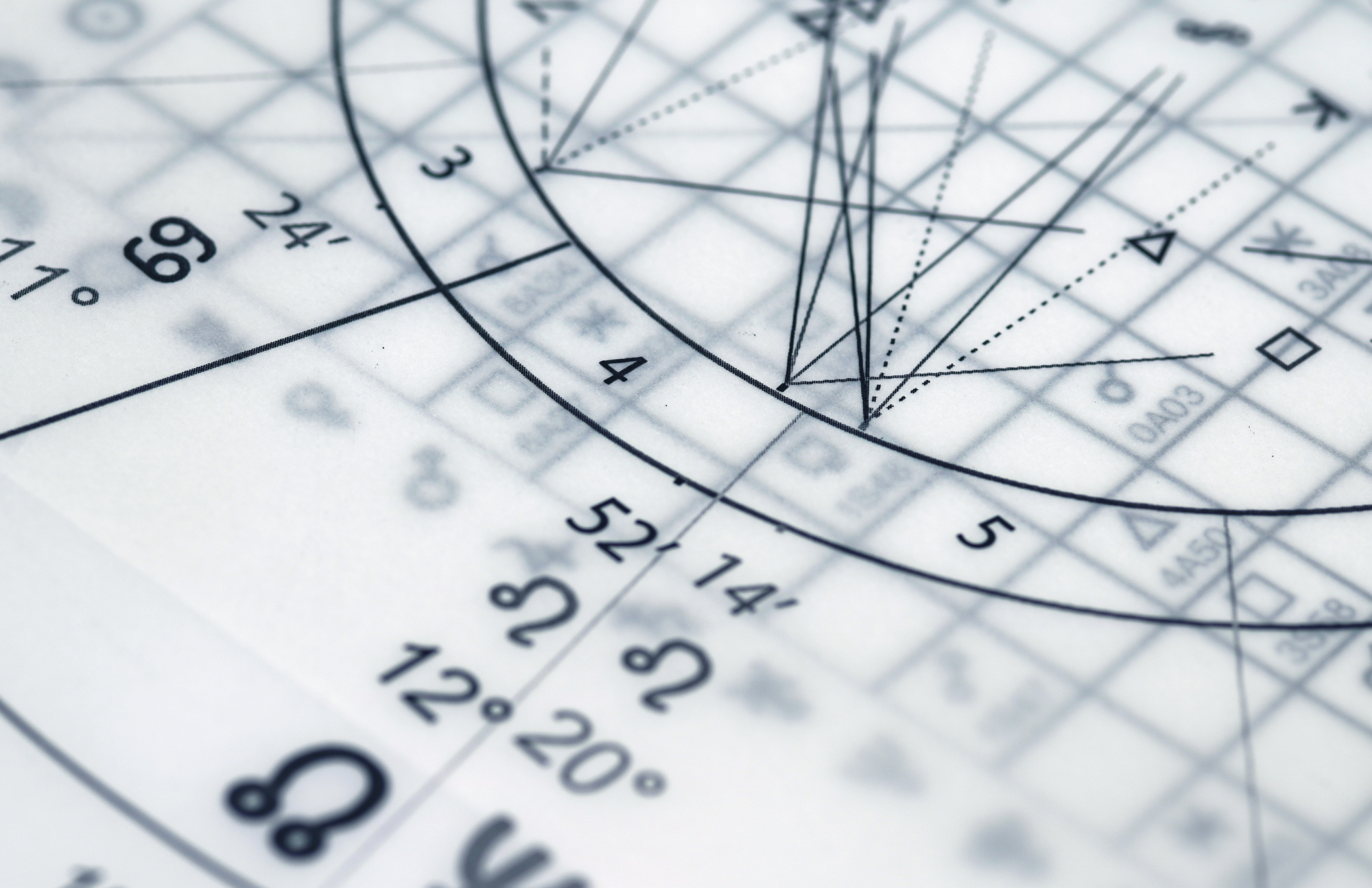
You might have wondered what your natal chart reveals beyond your sun sign. Most people know about simple birth chart readings, but professional astrologers dive much deeper to uncover hidden patterns that mold our lives and personalities.
A really thorough look at natal chart interpretation shows that astrology reaches way beyond personality descriptions. Astrologers can use these charts to answer specific questions, understand why things happen in our lives, and predict important life events . The right interpretation methods help us tap into layers of insight that newcomers often miss.
This piece walks you through the professional way to interpret birth charts. You’ll learn a simple, step-by-step process that makes complex concepts easy to grasp . We’ll show you what experts look for in natal charts – from angular planets and “Big Three” dynamics to house rulership chains and overlooked points . The techniques you’ll find here will help you turn a simple chart reading into a powerful tool for self-discovery, whether you’re just starting out or want to deepen your understanding.
The Role of Angular Planets in Chart Interpretation
Professional astrologers watch planets at the angles of a natal chart closely. These positions shape a person’s life path and personality deeply. Angular houses represent the four most important pillars of human experience, which makes planets in these houses powerful influences.
Why planets near the Ascendant and Midheaven matter
The angular houses—1st, 4th, 7th, and 10th—are the foundations of the birth chart. These houses contain four angles: the Ascendant (eastern horizon), Imum Coeli or IC (lowest point), Descendant (western horizon), and Midheaven or MC (highest point). On top of that, planets in these houses become the most meaningful forces in someone’s life [1].
Planets next to an angle (within 0-8 degrees) wield exceptional power. These positions often overshadow other elements in the chart, including the Ascendant ruler [2]. A planet’s influence grows stronger as it moves closer to an angle. Applying aspects, where the planet’s degree exceeds the angle’s degree, create stronger effects than separating aspects [2].
A planet on the Ascendant shapes how you express yourself and how others see you. This placement isn’t just a “mask” as some might say—it works more like a radio station that tunes the theme song of your existence [2]. To cite an instance, someone with Mercury rising naturally shows gifts in communication, writing, or analytical thinking. They become a living expression of Mercury’s energy [2].
The Midheaven shows your public image and career path. A planet next to the MC acts as your ambassador, showing how you direct yourself in professional and public spaces [2]. This planet influences what you want to achieve and often reflects themes in public consciousness [1].
Saturn on the Ascendant: A case of cautious realism
Saturn next to the Ascendant creates a unique personality full of seriousness, responsibility, and caution. These people often live through an unusual pattern—they feel responsible for family members and carry heavy duties from childhood [3]. Their strong work ethic becomes both a gift and a challenge.
These individuals usually appear shy and conservative. They worry too much and might hesitate to take risks or start relationships [3]. This careful approach can lead them to miss opportunities and feel lonely.
Saturn on the Ascendant brings significant benefits. Saturn’s influence gets better with age as a “late bloomer” planet [3]. These people earn respect for their reliability, attention to detail, and dependability over time. Their careful realism eventually becomes wisdom and authority in their field [3].
Jupiter on the IC: Hidden optimism and family roots
Jupiter next to the Imum Coeli (IC) creates an interesting mix of optimism and personal foundations. This position fills emotional foundations with growth and abundance [4]. The IC shows our deepest self, and Jupiter here connects personal growth with our sense of security [5].
People with this setup often develop deep wisdom from their experiences and understanding of their roots [5]. Their optimism stays hidden from public view but works as a powerful inner resource.
Family and home life become paths for growth with this placement. These people might want to expand their living spaces or create welcoming home environments [5]. Jupiter on the IC often shows a need to connect with origins while reaching for new horizons—balancing growth with inner stability [5].
Chart interpretation becomes clearer when you understand these angular placements. They reveal core life themes and how people express themselves in public and private.
The Big Three: Sun, Moon, and Rising Sign Dynamics
Professional astrologers start their natal chart readings by looking at “The Big Three” – the Sun, Moon, and Rising sign (Ascendant). These elements are the foundations of how personality expresses itself. They give us a clear picture of someone’s core essence, emotional nature, and outward behavior.
How the Ascendant sets the tone of the chart
The Ascendant or rising sign opens the door to natal chart interpretation. This vital point represents the zodiac sign that was coming up on the eastern horizon right when you were born. Your sun sign changes every 30 days or so. The Ascendant moves faster and changes signs every two hours on average [6]. This makes your rising sign unique to your birth time and location.
People notice your Ascendant traits when they first meet you. It’s more than just a surface-level mask. Expert astrologers say your rising sign reveals how you naturally respond to your environment and defend yourself against daily challenges [7]. Your first reaction to new situations and people comes from this sign.
Your rising sign works like a filter that expresses your entire personality. One astrologer describes it beautifully as “the stained glass through which the light of the psyche is shining” [8]. It takes the deeper parts of your psyche and turns them into visible social behavior. This sets the tone for your entire chart.
Sun-Moon phase and its psychological effect
Your Sun and Moon signs create a psychological framework that shapes your whole personality. The Sun shows your core identity, drive, and ego – who you truly are [9]. It describes your basic attitude and spirit.
The Moon rules your emotional nature. It represents parts of yourself that you might not show openly but feel deeply inside [9]. Your moon sign reveals your emotional needs, memories, past experiences, and relationship with maternal influences.
The phase between these two lights creates distinct psychological patterns. A Full Moon birth (Sun and Moon opposite each other) often brings emotional tension as these energies pull apart [10]. People born at this time might be more self-aware but also experience stronger emotions.
New Moon babies (Sun and Moon together) often have these energies working as one. This creates a fresh start mindset and brings a calm, motivated approach to life [10]. The Sun-Moon relationship builds a psychological base that affects everything from making decisions to processing emotions.
Rising sign ruler and its placement
The planet ruling your rising sign, called the “chart ruler,” completes the Big Three dynamic. This planet plays a key role in natal chart readings and directs how your personality expresses itself [8].
Scorpio Rising people have two chart rulers – Mars (traditional) and Pluto (modern) [8]. The sign and house placement of this ruling planet shows how you express your rising sign’s qualities.
Your chart ruler’s house shows where your natural energy flows best [11]. Leo Rising people with their Sun (chart ruler) in the 10th house express Leo traits through their career and public image. They naturally take leadership roles and bring creativity to their work life [11].
The aspects to your chart ruler, especially conjunctions or oppositions with personal planets, change how you show your rising sign’s qualities [7]. Your Ascendant and its ruling planet create a unique signature that astrologers study carefully in chart interpretation.
Looking at these three parts – Sun, Moon, and Ascendant – gives astrologers deep insights into core personality dynamics. They are the perfect starting points to understand a complete natal chart.
Hidden Patterns: Planetary Geometry and Chart Shape
Professional astrologers get into the overall distribution of planets in the natal chart, not just individual planets and their placements. Beginners often miss these patterns and shapes. These elements are the foundations of understanding personality structure and how people approach life.
Locomotive, Bundle, and Splash patterns
Marc Edmund Jones first identified how the distribution of planets creates distinct patterns. Three configurations stand out as especially meaningful.
The Locomotive pattern shows up when planets take up about two-thirds (240 degrees) of the zodiac wheel. One-third (120 degrees) stays completely empty. This creates a dynamic personality with tremendous drive and energy. People with this setup make their own rules. They tackle life with exceptional determination and stick to their goals. The planet right after the empty space clockwise becomes the chart’s “engine.” It powers the person’s motivation and direction.
The Bundle pattern (also known as Wedge or Cluster) packs all planets into just one-third (120 degrees) of the chart. This tight grouping creates someone with laser-like focus. These people can concentrate intensely on specific areas but might overlook others. Unlike locomotive types who spread their energy around, bundle folks pour themselves into fewer areas. They often become specialists or experts in their fields.
The Splash pattern spreads planets evenly across the chart. This setup creates versatile people with wide-ranging interests and skills. You don’t see this pattern as much as others. Splash personalities have natural charisma and adapt quickly to different situations. Their biggest challenge lies in focusing their scattered energies productively instead of becoming “jacks of all trades, masters of none.”
How chart shape reveals life approach
Your natal chart’s shape tells a lot about how you handle life’s challenges and opportunities.
Bundle personalities show incredible focus and determination. They shine in specialized fields that need deep concentration. Their magnetic personalities grow stronger as their planetary grouping gets tighter. In spite of that, they might struggle with situations outside their expertise.
Locomotive individuals have amazing practical abilities and single-minded determination. These self-starters never give up yet can adapt to change. They use their resources efficiently. Sometimes they feel something’s missing in life areas shown by the empty chart section.
Splash personalities accept new ideas and adapt naturally. Their varied interests help them connect with different people and situations. This diversity can lead to scattered efforts without proper focus. They need to channel their wide-ranging abilities into productive outcomes.
Dominant hemisphere and its influence
The natal chart splits into four hemispheres. Each one shows distinct personality traits.
The Eastern Hemisphere (houses 1, 2, 3, 10, 11, 12) highlights self-motivation and initiative. People with eastern dominance take action and believe strongly in free will. They make decisions on their own rather than looking for outside approval.
The Western Hemisphere (houses 4, 5, 6, 7, 8, 9) creates people who think of others first. These folks check what others need before they act. They stay open to outside influences. People see them as “fate-driven,” but they just process information differently.
The Northern Hemisphere (houses 1-6) centers on personal, subjective experiences. Northern dominance creates private individuals who focus on personal growth and finding their identity.
The Southern Hemisphere (houses 7-12) puts emphasis on social and objective matters. Southern-dominant charts create sociable people interested in group experiences and external events. They care about these whatever the personal effect might be.
Professional astrologers learn about these patterns to understand how we spread energy across different parts of life. This knowledge helps them interpret natal charts completely.
Aspects That Professionals Prioritize
Professional astrologers focus on specific planetary aspects that substantially affect a person’s life experiences. The subtle connections between celestial bodies give vital clues that new astrologers might overlook during interpretation.
Applying vs separating aspects
The direction of planetary movement creates a vital difference in professional natal chart interpretation. Planets moving closer to an exact angle create an applying aspect, which intensifies their influence. The separating aspect occurs as planets drift apart, and their energy gradually fades [2]. This tells us whether a planetary influence grows stronger or weaker.
Applying aspects pack more punch than separating ones. These aspects represent energies that continue to develop and possibilities waiting to unfold. A Mars-Venus applying aspect might point to growing creative energy or passion. The same aspect in separation shows these energies have reached their peak and now decline [12].
Applying aspects help prepare for new challenges ahead. Separating aspects encourage us to process recent events and absorb their lessons [12]. This time-based perspective adds rich context that casual readings often miss.
Tight orbs and angular placements
An aspect’s power comes from its type and its “orb”—the degree range from the exact angle. Astrologers pay special attention to tight orbs (1-3 degrees). These close planetary connections show up powerfully in someone’s life compared to wider-orbed aspects [13].
To name just one example, a tight Sun-Moon conjunction (0°) creates a powerful blend of ego and emotion that shapes identity [13]. Loose orbs (7-10 degrees) still matter but create subtle effects that often stay below conscious awareness [13].
Each aspect type allows different orb ranges:
-
Conjunctions, oppositions, and squares work with wider orbs
-
Sextiles and trines need tighter orbs to matter
-
Major aspects like conjunctions outweigh minor aspects like quintiles [2]
Planets with tight orbs to chart angles (Ascendant, Midheaven, IC, Descendant) become prominent features. These angular placements often overshadow other elements, including the Ascendant ruler.
Outer planet aspects to personal planets
The most life-changing aspects happen when slow-moving outer planets (Uranus, Neptune, Pluto) connect with personal planets (Sun, Moon, Mercury, Venus, Mars). These aspects turn universal energies into deeply personal experiences [1].
Outer planets move slowly and shape generational themes, while personal planets reflect individual experiences. An outer planet aspecting a personal planet triggers deep changes in personality and life direction [2]. This works like “using a nuclear generator to power a flashlight”—massive collective energy flows through personal expression [1].
Hard aspects between outer and personal planets create more dramatic effects than harmonious ones. These challenging connections often spark life-changing events or psychological breakthroughs [1]. Pluto square Venus might revolutionize relationships, while Uranus conjunct Mercury could spark sudden mental insights.
Outer planet combinations that aspect a personal planet deserve special attention. These setups can create remarkable talents, unique viewpoints, or unusual life patterns. They often stand out as the most distinctive features in chart interpretation, showing where universal forces shape personal destiny [1].
Skilled astrologers realize the full potential of natal chart interpretation by carefully studying these key aspects. This reveals hidden patterns that shape an individual’s life experience.
House Rulership Chains and Dispositors
Professional astrologers take natal chart interpretation to new heights by understanding how planets connect with each other. They analyze individual planets and get into how these celestial bodies relate through house rulership chains and dispositors.
How to trace planetary rulers through houses
The natal chart shows each house with a sign on its cusp, and that sign has a planetary ruler. This creates an influence chain where planets govern specific life areas through rulership. You can trace these chains by first identifying which sign rules each house in your chart. The ruling planet’s location in your chart—its sign and house placement—shapes how the original house expresses itself [14].
To name just one example, Venus becomes your 11th house ruler if Taurus rules your 11th house. Venus in your 4th house creates a link between your social networks (11th house) and your home life (4th house). These house themes merge in your life experience [14].
Final dispositor and its significance
The final dispositor acts as your chart’s hidden CEO and reveals the most important planetary influence in your life [15]. You can find it by following the chain of rulerships until you discover a planet in its own sign (domicile).
The process starts with any planet – find the sign it occupies, then locate that sign’s ruler. Keep going until you reach a planet in its own sign. This planet becomes the final dispositor and acts as the ultimate authority in your chart [16].
Some charts have multiple final dispositors while others have none. A final dispositor points to your core energy or central life theme. This is a big deal as it means that when it rules the Ascendant, sits in an angular house, or connects with key points like your Sun or Moon [15].
Intercepted signs and hidden themes
Intercepted signs happen when a sign sits completely inside a house without touching any house cusp [17]. You’ll see this mainly in unequal house systems like Placidus. The opposite sign must also be intercepted when one sign gets intercepted.
Intercepted signs show energies that don’t express themselves easily or directly. Professional astrologers see these signs as opportunities for intuitive growth rather than problems [3]. These signs reveal areas where energy flows inward before showing up on the outside, similar to retrograde planets [3].
Planets in intercepted signs work in subtle but profound ways. They need patient development and often work through intuition instead of direct action. These placements tap into unique creative potential when you understand and integrate them properly [17].
Retrogrades, Nodes, and Other Overlooked Points
Several powerful but often overlooked elements lie beneath the basic components of a natal chart. These subtle influences are vital for a complete chart analysis, as experienced astrologers know.
Retrograde Mercury and karmic lessons
Mercury retrograde periods are a great way to get karmic growth rather than just causing chaos. When planets seem to move backward, they point to unfinished karmic lessons that need attention and resolution. Mercury retrograde specifically shows three main karmic themes: impatience from trying to control outcomes instead of trusting natural timing, self-betrayal by avoiding hard truths in relationships, and problems with speaking personal truth and setting boundaries [18]. These times encourage us to contemplate and revisit unsolved communication issues from our past.
North Node conjunctions and life direction
The North Node shows your soul’s forward path—often called the “point of destiny” [19]. The South Node reflects your comfort zone and past life skills, while the North Node shows qualities you need to develop for spiritual progress [20]. Personal planets that connect with the North Node create powerful karmic bonds. These arrangements can light up life purpose (Sun-North Node) or enhance emotional understanding (Moon-North Node) [19]. The North Node aspects show where your soul yearns for growth—an “unquenchable hunger” for experiences in that area of life [20].
Chiron and unresolved wounds
Chiron—the “wounded healer”—reveals our deepest emotional injuries and potential for change in professional natal chart readings [21]. Its position shows where we carry deep wounds while also having remarkable healing abilities [22]. These core wounds come back for final resolution during the one-time Chiron Return (ages 46-53) [23]. Chiron brings hidden wounds to the surface so we can blend them into our life experience [21]. We often find unique gifts to help others through similar challenges when we face these vulnerabilities.
Conclusion
Professional astrologers work like detectives to uncover hidden cosmic patterns that shape our lives. Our exploration has gone way beyond simple sun sign astrology. Deep self-knowledge awaits in this rich territory.
Angular planets act as powerful forces in our charts and become the main characters in our life stories. The Big Three—Sun, Moon, and Rising sign—work together as the foundations of personality. They create a psychological framework unique to each person. Chart shapes like Locomotive, Bundle, and Splash patterns show distinctive ways to handle life’s challenges throughout our trips.
Aspects between planets weave an equally compelling story. Tight orbs and applying aspects hold special meaning. Outer planet aspects to personal planets often signal transformative life events. House rulership chains link seemingly separate life areas into meaningful patterns. Final dispositors serve as the hidden CEOs of our charts.
Your chart holds powerful karmic insights in often overlooked elements like retrograde planets, North Node conjunctions, and Chiron placements. These subtle yet vital influences paint a complete picture of who we are and who we might become.
A professional’s interpretation of your birth chart creates a cosmic roadmap for self-understanding. It highlights both challenges and gifts along your unique life path. The chart’s wisdom unfolds naturally through lived experience. Each passing day reveals deeper layers of meaning as you grow.
The stars are nowhere near simple horoscope readings when you look at your natal chart. They hold the blueprint of your authentic self, waiting to be uncovered through hidden patterns that only a trained eye can fully reveal.
Key Takeaways
Professional astrologers look beyond sun signs to uncover hidden patterns that reveal your authentic self and life purpose through sophisticated chart analysis techniques.
• Angular planets (near Ascendant/Midheaven) dominate your chart – These placements often overshadow other elements and fundamentally shape how you express yourself publicly and privately.
• The Big Three work as a psychological framework – Your Sun, Moon, and Rising sign create a unique personality triangle, with the chart ruler directing how you manifest these energies.
• Chart shapes reveal your life approach – Locomotive patterns show drive and determination, Bundle patterns indicate intense focus, while Splash patterns suggest versatility and adaptability.
• Tight aspects between outer and personal planets trigger transformation – These connections channel universal energies through individual expression, often marking profound life changes and unique talents.
• House rulership chains connect seemingly separate life areas – Tracing planetary rulers reveals hidden connections between different aspects of your life, with final dispositors acting as your chart’s central authority.
Understanding these professional techniques transforms basic horoscope reading into a powerful tool for self-discovery, revealing the cosmic blueprint of your authentic potential and karmic lessons.
FAQs
Q1. What are the most important elements professional astrologers look at in a natal chart? Professional astrologers focus on angular planets, the “Big Three” (Sun, Moon, and Rising sign), chart shapes, aspects between planets, house rulership chains, and often overlooked points like retrograde planets and the North Node. These elements provide deeper insights into personality and life patterns.
Q2. How do chart shapes influence a person’s approach to life? Chart shapes like Locomotive, Bundle, and Splash patterns reveal distinct approaches to life challenges. For example, a Locomotive pattern indicates drive and determination, a Bundle pattern suggests intense focus in specific areas, and a Splash pattern points to versatility and adaptability across various life domains.
Q3. What is the significance of the final dispositor in a natal chart? The final dispositor acts as the hidden CEO of your chart, providing concentrated insight into the most essential planetary influence in your life. It’s typically a planet positioned in its own sign and indicates your core energy or central life theme.
Q4. How do outer planet aspects to personal planets affect an individual? When slow-moving outer planets (Uranus, Neptune, Pluto) form aspects with personal planets (Sun, Moon, Mercury, Venus, Mars), they can trigger profound transformation in personality, life path, or behavior. These aspects often manifest as transformative life events or psychological turning points.
Q5. What role does Chiron play in natal chart interpretation? Chiron, known as the “wounded healer,” reveals our deepest emotional injuries and capacity for transformation. Its placement in the natal chart identifies where we carry profound wounds yet simultaneously possess extraordinary healing potential, often leading to unique gifts for helping others through similar struggles.
References
[1] – https://horoskoop.ee/blogposts/universal-becomes-personal-outer-planet-combinations-in-your-natal-chart/165/7027
[2] – https://www.centreofexcellence.com/major-and-minor-aspects-in-astrology/
[3] – https://www.llewellyn.com/journal/article/2680?srsltid=AfmBOop2ukjnsNwtWT2VuFeS-ymKqrVen8T7aAAAz9c_v0IQEOtMLrex
[4] – https://medium.com/@HermesAstrology/jupiter-conjunct-ic-in-signs-bcec97aef0b5
[5] – https://authorityastrology.com/aspects/jupiter-conjunct-imum-coeli
[6] – https://cafeastrology.com/whats-my-ascendant-sign.html
[7] – https://cafeastrology.com/risingsignsascendant.html
[8] – https://www.forrestastrology.com/blogs/astrology/ascendant-ruler
[9] – https://www.today.com/life/astrology/sun-moon-rising-meaning-rcna23286
[10] – https://www.indastro.com/astrology-articles/effects-moon-phases-emotions.html
[11] – https://www.astroclub.com/blog/chart-ruler-astrology
[12] – https://www.astrotheme.com/applying-and-separating-aspects.php
[13] – https://timesofindia.indiatimes.com/astrology/zodiacs-astrology/aspect-orbs-in-astrology-how-tight-or-loose-orbs-change-the-impact-of-planetary-connections/articleshow/114461513.cms
[14] – https://alicebell.substack.com/p/ruling-planets-and-why-theyre-so
[15] – https://tiffanyharelik.com/final-dispositor/
[16] – https://www.ivanaastrology.com/post/the-final-despositor-in-astrology
[17] – https://www.forrestastrology.com/blogs/astrology/intercepted-signs
[18] – https://www.hindustantimes.com/astrology/horoscope/3-major-karmic-lessons-of-mercury-retrograde-expert-suggests-how-to-heal-them-101742901099476.html
[19] – https://timesofindia.indiatimes.com/astrology/others/the-significance-of-north-node-connections-in-astrology-guiding-your-path-to-destiny/articleshow/111056431.cms
[20] – https://girlandhermoon.com/astrology-and-your-soul-purpose-the-north-node-through-the-signs/
[21] – https://timesofindia.indiatimes.com/astrology/planets-transits/how-chiron-transits-heal-facing-wounds-to-find-wholeness/articleshow/115427089.cms
[22] – https://www.thepaganista.com/blog/chiron-wounded-healer
[23] – https://www.image.ie/self/the-chiron-return-the-mid-life-crisis-is-actually-based-on-astrology-266724
Leave a Reply