
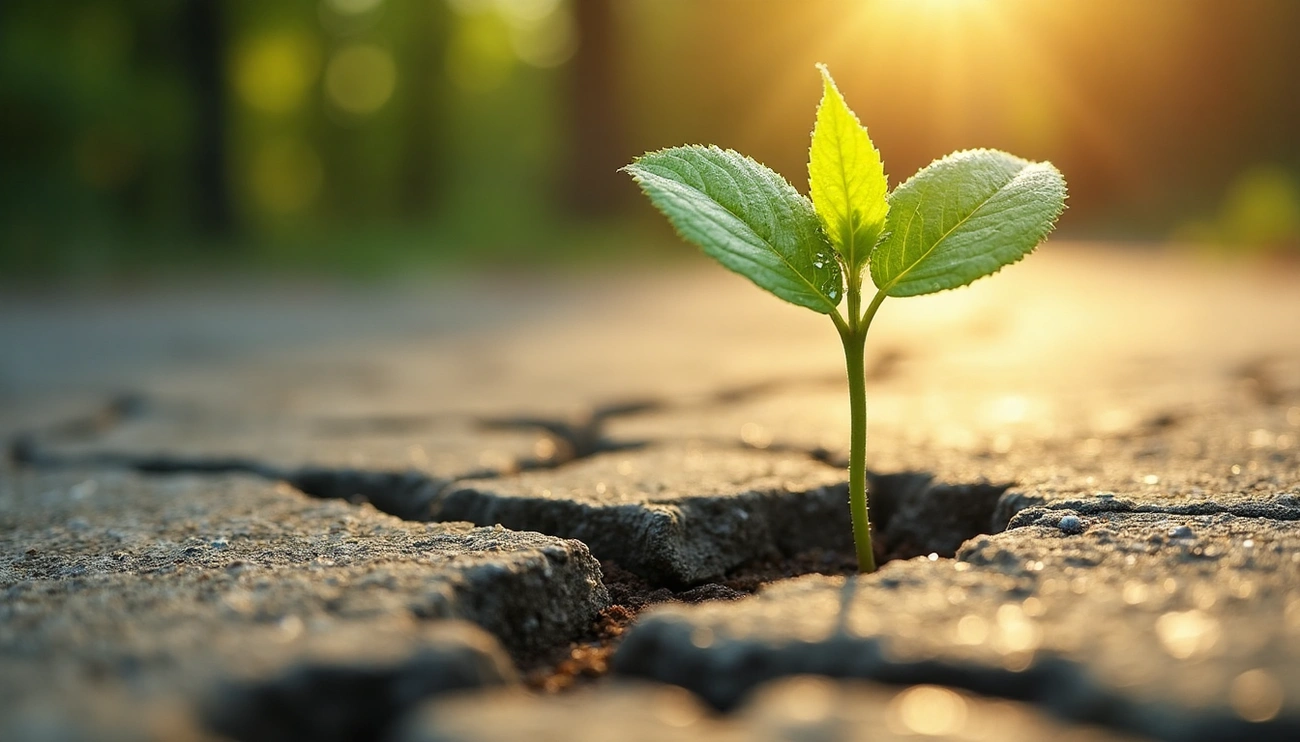
Bouncing back from setbacks means more than just returning to your starting point—you emerge stronger than before. Psychologists define resilience as “the process of adapting well in the face of adversity, trauma, tragedy, threats, or significant sources of stress” . True resilience goes beyond simple recovery and turns challenges into opportunities that help you grow.
Most people try to return to their comfort zones when life gets difficult. A better approach sees resilience as a path to rebuild yourself after obstacles appear . This change in viewpoint matters because overcoming challenges needs more than just getting back to normal—it needs personal growth. Research gave an explanation about building confidence and resilience to bounce back from tough times . Self-compassion plays a vital role in dealing with setbacks. This piece shares proven strategies that help you thrive through difficulties rather than just survive them.
Understanding Resilience Beyond Recovery
“No one escapes pain, fear, and suffering. Yet from pain can come wisdom, from fear can come courage, from suffering can come strength – if we have the virtue of resilience.” — Eric Greitens, Former Navy SEAL, author of ‘Resilience’, former Governor of Missouri
People often think resilience just means “bouncing back” from tough times. The real meaning goes much deeper. Resilience is “the process of adapting well in the face of adversity, trauma, tragedy, threats, or significant sources of stress” [1]. This way of adapting needs mental, emotional, and behavioral flexibility that’s nowhere near just getting back to where you were.
What resilience really means
Resilience works more like a sliding scale than an on-off switch [2]. You don’t simply have it or not – it’s a changing ability that shows up differently in various parts of life. Resilience means more than just getting through hard times. Dr. Rachel Yehuda points out that true resilience needs “a conscious effort to move forward in an insightful integrated positive manner as a result of lessons learned from an adverse experience” [2].
Why bouncing back is not enough
The old idea that resilience just means “bouncing back” doesn’t show its power to change lives. Studies of post-traumatic growth show that many people turn their tough experiences into something positive [3]. They grow not in spite of challenges but because of them. Just getting back to normal misses the chance to progress that setbacks give us. One expert says “What doesn’t kill you makes you stronger” becomes true only when you actively learn from setbacks [3].
The difference between recovery and growth
Recovery and growth take different paths when dealing with life’s setbacks. Recovery tries to get back what was lost [4]. Growth builds new skills and viewpoints. Recovery fixes damage, while growth turns that damage into something valuable.
Here’s the key difference: recovery keeps you working through hard times, but growth helps you find new possibilities you never saw before [5]. The growth process typically builds mental toughness, reveals character strengths, creates an optimistic outlook, and promotes strong relationships [5]. This trip turns setbacks from roadblocks into stepping stones that move you forward.
The Inner Work: Mindset Shifts That Build Strength
Mental strength comes from our thoughts about ourselves and our challenges, not just our actions. The way we process setbacks changes when we consider different views about handling tough situations.
Adopting a growth mindset
Stanford psychologist Carol Dweck’s research shows two mindsets that affect resilience deeply. A growth mindset sees abilities as qualities we can develop through effort. A fixed mindset believes these qualities can’t change. People with growth mindsets show more resilience because they:
-
See challenges as opportunities
-
Keep going through setbacks
-
Know effort leads to mastery
-
Learn from criticism
-
Feel inspired by others’ success
This view helps you love learning more than seeking approval, which makes you better at handling tough times [6].
What role does self-compassion play in overcoming setbacks
Self-compassion means being as kind to yourself as you’d be to a good friend during tough times. It’s different from self-pity that makes you ask “why me?” Self-compassion helps you see struggles as something everyone goes through [7]. Research shows people who practice self-compassion take more responsibility for their mistakes and try harder to fix situations [7]. On top of that, it creates a safe space where you can look at your failures without being too hard on yourself.
Reframing failure as feedback
Looking at failure as a source of information instead of a personal flaw gives you room to grow. This change turns setbacks into chances to learn rather than threats. Research proves that seeing failures differently helps you look at problems clearly, learn valuable lessons, and use what you’ve learned as you move forward [8]. Each challenge then becomes a chance to improve rather than proof that you’re not good enough.
Letting go of perfectionism
Perfectionism can trap you in endless cycles of overthinking and stress while making you miss opportunities [9]. Many people think it’s a strength, but it actually makes it harder to bounce back because it creates black-and-white thinking. The 70/30 rule suggests you should try to do well 70% of the time instead of chasing perfect results [10]. This approach eases stress and lets you grow through your mistakes.
Practical Strategies to Grow Stronger After Setbacks
Putting theory into practice needs specific strategies that build your resilience muscle. These useful techniques help you turn setbacks into stepping stones that lead to growth.
1. Learn from what happened
Take time to get into your experiences objectively to find valuable insights. See what triggered the setback, how you responded, and what lessons you learned. This self-awareness helps you spot patterns and understand yourself better. Note that discomfort is normal but manageable – try “defusing” from your thoughts instead of identifying with them [11].
2. Set small, meaningful goals
Breaking larger objectives into manageable chunks activates your brain’s reward system. Small wins release dopamine and create motivation to keep going [12]. Put your goals in present tense (“I am completing…” rather than “I will complete…”) because this registers as a command to your subconscious mind [13].
3. Practice emotional regulation techniques
Learn to manage emotional reactions through practical techniques. The three-breath technique activates your parasympathetic nervous system and immediately reduces anxiety [14]. On top of that, it helps to name emotions (“I’m feeling frustrated”) because this reduces their intensity by activating your prefrontal cortex [14].
4. Build daily habits that support resilience
Make these resilience-building activities part of your daily routine:
-
Morning routines eliminate indecision and create structure
-
Regular exposure to nature rejuvenates mental strength
-
Evening rituals provide closure and prepare for rest [15]
5. Use visualization and positive self-talk
Visualization prepares you for challenges as you mentally rehearse success scenarios. This practice builds confidence, reduces anxiety, and keeps you motivated during difficult times [16]. Positive self-talk fights negative thought patterns that wear down your emotional resilience.
6. Track your progress and celebrate wins
Regular progress monitoring shows what works and what doesn’t. Create a “ta-da!” list to document your daily accomplishments [17]. More importantly, celebrating small victories releases dopamine, which boosts your mood and motivation to achieve more [17].
The Power of Connection and Support Systems
“When we tackle obstacles, we find hidden reserves of courage and resilience we did not know we had. And it is only when we are faced with failure do we realize that these resources were always there within us. We only need to find them and move on with our lives.” — A.P.J. Abdul Kalam, 11th President of India, aerospace scientist
Our ability to overcome life’s challenges depends on human connection. Social support isn’t just nice to have – we need it to stay healthy both physically and mentally [18].
Why support networks matter
People who have strong social support networks live longer, healthier lives and feel better overall [19]. These relationships become especially valuable for older adults dealing with health issues [20]. Research shows that meaningful connections lower your risk of heart disease, depression, and cognitive decline [1]. Strong social circles also help people make safer choices and stick to their treatment plans [18].
How to ask for help without guilt
Our culture values independence so much that many of us struggle to ask for help. Yet reaching out shows courage, not weakness [2]. Here are some ways to make asking easier:
-
Tell people exactly what you need
-
Put your request in writing if talking feels too hard
-
You don’t need all the answers right now [2]
Use mentors and community
A good mentor gives you guidance that matches your strengths and goals [21]. They share practical knowledge and boost your confidence with emotional support [21].
Overcoming isolation during tough times
Regular check-ins with family and friends through different channels help you stay connected [1]. Support groups focused on your specific challenges can make a big difference [22]. Your social connections make you stronger against whatever life throws your way.
Conclusion
Resilience shows our ability to turn challenges into opportunities for growth. Life teaches us that just bouncing back isn’t enough – adversity gives us a chance to become stronger, wiser, and more capable than before.
Resilience doesn’t appear magically in tough times – it needs practice. The changes in mindset we’ve explored – embracing growth, practicing self-compassion, reframing failure, and letting go of perfectionism – are powerful internal tools. These mental frameworks help us handle setbacks in productive ways rather than destructive ones.
The practical strategies we’ve discussed create a clear path for anyone facing obstacles. Self-reflection helps us learn valuable lessons from our experiences. Small, meaningful goals build momentum when bigger tasks seem too much. Emotional regulation techniques help us direct intense feelings without getting overwhelmed. Simple daily habits, visualization, and progress tracking strengthen our resilience even in peaceful times.
Building resilience needs human connection – no one does it alone. Support networks, mentors, and communities provide practical guidance and emotional support in challenging times. Asking for help shows wisdom, not weakness.
Resilience won’t shield us from life’s difficulties, but it changes how we experience and grow through them. Each setback gives us a chance to find strengths we never knew we had. This new viewpoint changes everything – from fearing challenges to seeing them as catalysts for our development.
The next time you face a setback, know this: your goal isn’t just to get back to where you were. You can build something better, stronger, and more meaningful because of what you’ve been through. This is the true power of resilience – not just bouncing back but growing forward.
Key Takeaways
True resilience isn’t about returning to your previous state after setbacks—it’s about using challenges as catalysts to emerge stronger, wiser, and more capable than before.
• Shift from recovery to growth mindset: View setbacks as learning opportunities rather than failures, embracing challenges as chances to develop new capabilities and perspectives.
• Practice self-compassion and emotional regulation: Treat yourself with kindness during difficult times and use techniques like the three-breath method to manage intense emotions effectively.
• Build resilience through small daily actions: Set manageable goals, track progress, celebrate wins, and establish consistent habits that strengthen your mental resilience muscle.
• Leverage support networks actively: Don’t hesitate to ask for help—strong social connections and mentorship provide essential emotional and practical support during challenging times.
• Reframe failure as valuable feedback: Transform setbacks from personal shortcomings into data points for improvement, extracting lessons that guide future success.
Remember, resilience develops through intentional practice, not by chance. Each challenge you face becomes an opportunity to discover hidden reserves of strength and build the foundation for future growth.
FAQs
Q1. How does resilience differ from simply bouncing back after a setback? Resilience goes beyond just recovering to your previous state. It involves using setbacks as opportunities for growth, developing new capabilities, and emerging stronger than before. True resilience is about adapting, learning, and evolving through challenges.
Q2. What role does mindset play in building resilience? Mindset is crucial in developing resilience. Adopting a growth mindset, practicing self-compassion, reframing failure as feedback, and letting go of perfectionism are key mental shifts that can help you build strength and resilience in the face of adversity.
Q3. Are there practical strategies to grow stronger after setbacks? Yes, there are several practical strategies. These include reflecting on what happened and what you learned, setting small meaningful goals, practicing emotional regulation techniques, building supportive daily habits, using visualization and positive self-talk, and tracking your progress.
Q4. How important are social connections in developing resilience? Social connections are vital for resilience. Strong support networks, mentors, and community involvement can provide emotional support, practical guidance, and help combat isolation during tough times. Don’t hesitate to ask for help when needed.
Q5. Can resilience be developed, or is it an innate trait? Resilience is not an innate, fixed trait but a skill that can be developed through intentional practice. By consistently applying resilience-building strategies and mindset shifts, anyone can enhance their ability to grow stronger through setbacks and challenges.
References
[1] – https://www.nia.nih.gov/health/loneliness-and-social-isolation/loneliness-and-social-isolation-tips-staying-connected
[2] – https://pivotalcounselingcenter.com/how-to-ask-for-help-when-youre-struggling/
[3] – https://www.forbes.com/councils/forbescoachescouncil/2019/04/09/bouncing-back-isnt-always-enough/
[4] – https://www.teamipro.com/resilience-vs-recovery-what-your-business-really-needs-in-a-crisis/
[5] – https://lipsychologist.com/resilience-training-program/post-setback-growth/
[6] – https://www.ie.edu/center-for-health-and-well-being/blog/embracing-resilience-developing-a-growth-mindset/
[7] – https://self-compassion.org/what-is-self-compassion/
[8] – https://www.exed.hbs.edu/blog/framing-failure-for-learning-innovation
[9] – https://nativeclinics.com/letting-go-of-perfectionism-how-to-embrace-good-enough/
[10] – https://www.herserenity.com/blog/how-to-let-go-of-perfectionism-for-greater-mental-wellness
[11] – https://positivepsychology.com/introspection-self-reflection/
[12] – https://www.groovnow.com/blog/goal-setting-rewire-your-brain-for-resilience
[13] – https://www.briantracy.com/blog/personal-success/personal-growth-goals/?srsltid=AfmBOoqPm1ockf0zNedKxoJJg_ba5xOFWwL6yg0U-737gWLJXHieaALD
[14] – https://www.betterup.com/blog/emotional-regulation-skills
[15] – https://www.success.com/7-daily-habits-to-build-your-resilience/
[16] – https://www.d16toastmasters.org/visualizing-success-a-roadmap-to-overcoming-challenges/
[17] – https://www.grandrisingbehavioralhealth.com/blog/the-benefits-of-celebrating-small-mental-health-victories
[18] – https://pmc.ncbi.nlm.nih.gov/articles/PMC2921311/
[19] – https://www.psychologytoday.com/us/blog/resilient-you/202311/cultivating-a-strong-social-support-network
[20] – https://greatergood.berkeley.edu/article/item/four_ways_social_support_makes_you_more_resilient
[21] – https://www.licenter.org/blog/how-to-leverage-mentorship-for-career-growth
[22] – https://www.apa.org/topics/stress/manage-social-support
Leave a Reply