
Key Takeaways
The self-care industry has transformed from a radical community wellness concept into a $5.6 trillion market that promotes isolation over connection, revealing why we’re lonelier despite unprecedented spending on wellness products.
• The commercialized self-care industry promotes solo activities over community connection, despite research showing loneliness is as deadly as smoking 15 cigarettes daily.
• Modern self-care culture blames individuals for systemic problems, creating expensive cycles of temporary relief rather than addressing root causes of burnout and stress.
• Real wellness comes from free community-based practices: calling friends, volunteering, spending time in nature, and building meaningful social connections.
• Social isolation costs the U.S. healthcare system $6.7 billion annually, while strong relationships reduce premature death risk by 50% and improve overall health outcomes.
• True self-care requires structural change and collective action, not individual consumption—choose community engagement over expensive products for genuine wellbeing.
The evidence is clear: we’ve been sold a lie that wellness comes in packages. Real healing happens in relationship with others, not in isolation with products. Prioritize human connection over consumption, and discover what authentic self-care actually feels like.
The self care industry has grown into a $5.6 trillion worldwide market, yet we’re lonelier than ever. I’ve watched this change firsthand as what began as an activist concept for marginalized communities became commodified into expensive products promising peace. The self care trend now promotes isolation rather than connection. It turns collective care into solitary consumption. The self-care industry growth mirrors rising loneliness rates and reveals a troubling pattern. We’ll get into how self care culture shifted from community wellness to commercial exploitation, explore self care industry statistics, and find what actually works for wellbeing.
How Self-Care Became a Commercial Product
Self-Care’s Origins in Healthcare and Activism
Medical professionals first used the term self-care in the 1950s. They described how institutionalized and elderly patients could manage their conditions while maintaining autonomy. State mental hospitals had seen a 240% increase in admitted individuals at that time, mostly poor and chronically ill [1]. The concept emerged from conversations about inhumane institutional conditions and how patients could preserve their sense of self.
The Black Panther Party transformed self-care from a medical term into a political weapon. They popularized and politicized the concept in the 1960s and 70s as communities faced systemic oppression from a racist medical system [2]. All new Black Panther Party chapters were required to run free health clinics by 1970 [3]. These clinics addressed illnesses disproportionately affecting Black communities, including sickle-cell anemia and lead poisoning [4].
Leaders like Angela Davis and Ericka Huggins incorporated yoga and meditation while incarcerated. They later championed nutrient-dense diets and physical movement to support mental health [5]. Wellness programs in recreation centers across Brooklyn and Oakland were created. Audre Lorde captured this radical change in her book A Burst of Light and wrote that caring for herself was “not self-indulgence, it is self-preservation, and that is an act of political warfare” [1].
The Wellness Movement of the 1960s-1980s
The wellness movement emerged alongside civil rights activism but took a different path. Halbert Dunn coined “wellness” in its modern sense in 1961. He described an integrated that could put people in a super-charged state [6]. John Travis opened the Wellness Resource Center in Mill Valley in 1975. The center offered lifestyle development groups and nutrition consultations [6].
This movement coincided with countercultural rebellion against Western industrialization. Swami Satchidananda and Maharishi Mahesh Yogi introduced transcendental meditation and yoga to Western audiences [6]. The first National Conference on Holistic Health occurred in California in 1975, and the Holistic Medical Association followed in 1978 [4].
Wellness moved from anti-capitalist roots to commodified form by the 1980s. Corporate wellness programs encouraged employees to work out and reduced healthcare costs [6]. Jane Fonda’s workout tapes and the rise of gyms turned fitness into a billion-dollar business. Wellness was no longer a rejection of capitalism but an extension of it.
Brands Found Self-Care After 2016
Self-care exploded as a buzzword around 2015 and 2016, tied to the U.S. presidential election [1]. Google searches for the term reached a five-year high after the election [7]. People unhappy with political results looked for ways to cope with their distress [8].
Companies recognized the commercial chance. Lululemon named its new line of beauty products Selfcare [8]. Online retailers began offering bathrobes and mindfulness puzzles to boost intimate self-care routines. Vogue’s YouTube channel featured celebrities who demonstrated their self-care routines and lent aspirational cachet to the movement.
Self Care Industry Growth: The $5.6 Trillion Market
The wellness economy reached $5.6 trillion worldwide as of 2022, with Personal Care & Beauty claiming the largest market share [1]. The industry grew 27% since 2020 and now sits 14% higher than its pre-pandemic 2019 record [9]. North America became the largest regional wellness economy with $1.9 trillion in revenue and spent $5,108 per capita annually [10].
The market is forecasted to hit $8.5 trillion by 2027 and grow at 8.6% annually [9]. Personal care and beauty accounts for $1.09 trillion, while healthy eating and nutrition represents $1.08 trillion [10]. We’ve built an economic empire from collective exhaustion. Every possible response to stress from meditation apps to sleep-tracking gadgets has been monetized.
Why Modern Self-Care Culture Promotes Isolation
Solo Activities Replace Community Connection
We live in a culture obsessed with optimizing everything about our health, except what might be the single most important thing: being connected to others [6]. The self care industry pushes bubble baths, meditation apps, and solo spa days as primary wellness solutions. Nobody tells us to book dinner with friends or take that vacation with family. We’re never taught to prioritize meaningful social involvement as critical for living a healthy life [6].
Feeling lonely or lacking social connection is riskier for us than obesity, lack of physical activity, and smoking [6]. Many of us are drowning in day-to-day responsibilities of parenting and providing care for older adults at home. We do it almost alone, and this leaves us feeling lonely and isolated in these roles [6].
The data support the reality that we’ll get sicker and die younger if we continue to pursue this track of devaluing social connection [6]. Western culture is grounded in the false belief that prioritizing social connections means we won’t work as hard, parent as well, or produce as much output [6].
The Me-First Mentality of Faux Self-Care
Mainstream narratives around self-care often center individual responsibility, productivity, and consumption. We’re taught that healing is something we do alone: buy the journal, take the bath, light the candle [11]. Care becomes a commodity when healing is privatized [11].
A growing number of self-proclaimed life coaches and mental health gurus espouse radical individualism in self-care. They prioritize self over all things, including familial and romantic relationships [12]. This movement has forgotten that human beings are designed to live in community with other people [12].
Marketing Loneliness as a Solution to Burnout
The commercialized self-care and wellness industries have bombarded us with ideas about pampering and temporary escape from the daily grind [13]. These cultural messages have evolved into internalized oppression disguised as self-care with the ultimate goal of recharging so you can continue prioritizing work demands over personal wellness [13].
We look inward more and more when companies market real vitalizing practices as individualized solutions to problems like burnout that just need structural change [4]. Secluding oneself by summoning sustenance to our doorstep comes at the expense of workers earning paltry wages to deliver that food [4].
How Self-Obsession Replaced Self-Preservation
Increased self-focused attention links to higher levels of depression, anxiety, and negative mood [14]. The very act of turning inward can worsen the distress many try to avoid [14]. A person can feel more isolated from others and trapped in a self-created bubble when attention and worry are focused on one’s own interests [14].
Self-preserving decision making allows us to prioritize our own inclinations but also help the development of our interpersonal relationships and community ties [15]. We understand we’re operating within a framework of self-empathy that we can translate into our interpersonal connections when we choose self-preservation [15]. The problem emerges when self-care becomes the sole focus of one’s life and creates an egotistic bubble where individual needs are placed above all else [16].
The Self-Care Industry Statistics Behind the Loneliness Epidemic
Self Care Industry Statistics: Market Size and Consumer Spending
Americans spent around $74 billion on personal care products in 2024. Cosmetics claimed 47% of that total [8]. The U.S. beauty and personal care market reached $109.56 billion in 2025 and projects growth to $196.33 billion by 2033 [17]. Mental wellness alone grew from $120.8 billion in 2019 to $131.2 billion in 2020 [1]. Google searches for self-care spiked during the pandemic and fed us more ads for products claiming to help us “do” self-care [18].
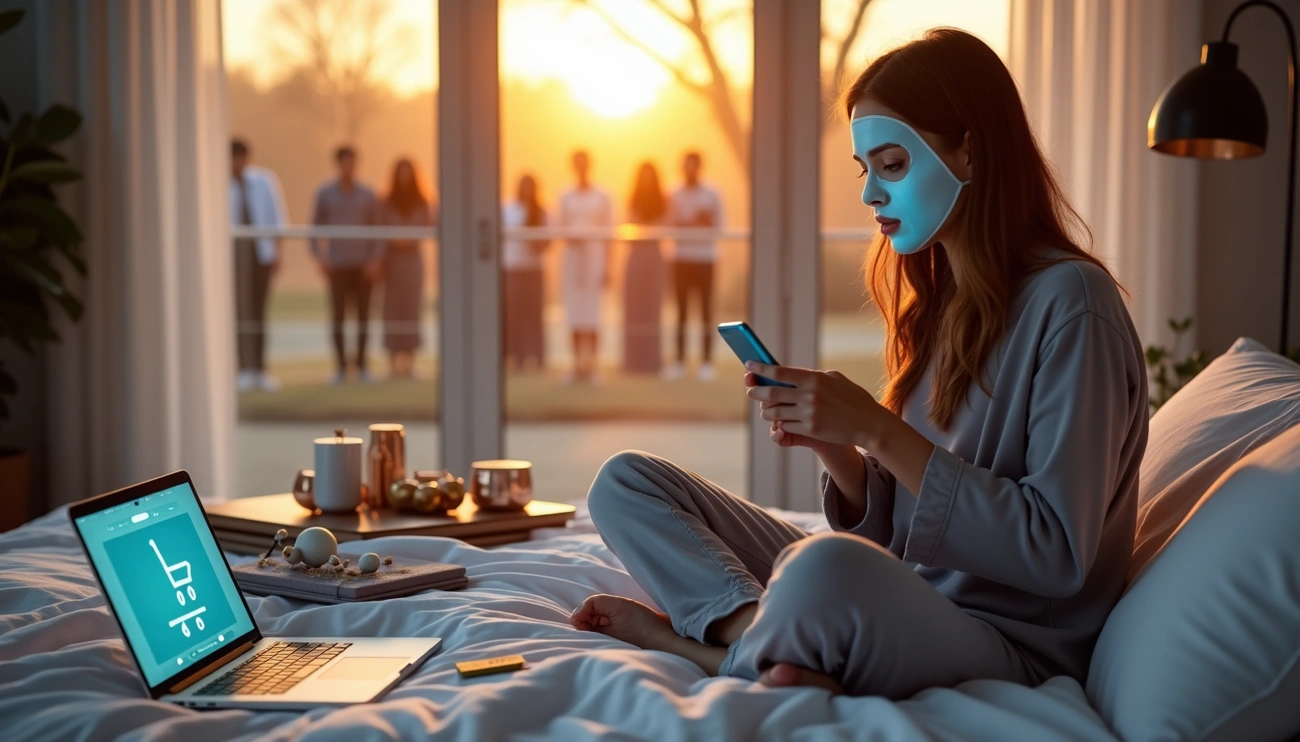
This spending creates a cycle. We push beyond our limits and buy a face mask to recover. We assume that’s enough because everyone else does it, then start again [18]. Put another way, we’re buying temporary distraction from problems that need structural fixes.
Loneliness Rates Mirror Industry Growth
A 2020 survey of 10,000 Americans found 61% suffer from loneliness. Rates remained about the same through 2022 [19]. One in two adults in America reported feeling lonely in recent years [7]. Come 2022, half the country felt lonely at least sometimes, a number that keeps growing [4].
The timing matters. The wellness industry hit $5.6 trillion by 2022 [4] and had doubled since 2013 [20]. Companies marketed products to make us feel better about being “completely alone at home having to deal with this without seeing anybody.” Basic human needs became commodities [19].
The Cost of Commodified Wellness
Social isolation among older adults makes up an estimated $6.7 billion in excess Medicare spending each year [7]. Loneliness costs U.S. employers around $154 billion per year in stress-related absenteeism [7]. The mortality impact of social disconnection equals smoking up to 15 cigarettes daily [7].
Reasonable estimates put the cost of loneliness between $250 and $200,000 per lonely patient each year [21]. These expenses mean that improving social connections could reduce healthcare costs by a lot. Yet the self care industry sold us the myth that wellness requires expensive purchases [22].
Who Profits from Your Isolation
Healthcare companies spent 95% of their net income on shareholder payouts over the past 20 years, totaling $2.6 trillion [23]. Funds get distributed to shareholders rather than reinvested in the healthcare system [23]. The mental wellness app market was valued at $7.48 billion in 2024 and should reach $20.92 billion by 2033 [9].
These platforms harvest intimate user data while lacking clinical validation [1]. We pay twice: once with our wallets and again with our privacy. We get questionable therapeutic benefits [1]. The self-care industry statistics reveal a system profiting from our isolation rather than solving it.
The Real Problems with Today’s Self Care Trend
Blaming Individuals for Systemic Issues
Framing self-care as personal responsibility perpetuates unsustainable individual responses. It fails to address structural conditions that drive burnout [10]. Broader systemic factors influence self-blame heavily, especially in BIPOC communities where systemic racism and discrimination lead to internalized feelings of inadequacy [24]. Self-care conceptualizations that center individual physical, emotional, and spiritual activities ignore structural factors and socioeconomic privilege. These determine who participates in these practices [10].
Those with greater financial stability, educational attainment, and positive mental health participate in more self-care [10]. Self-blame for illness adds unnecessary shame to already painful experiences. Studies show it’s associated with increased emotional distress, anxiety, and depression [25] [26]. Mindfulness helps self-regulation but does little about working conditions, long hours, and organizational inequities. We’re treating symptoms while we ignore root causes [10].
The Expensive Cycle of Buying Temporary Peace
Three-quarters of Americans have made beauty-related purchases for themselves. 54% bought skin care products [27]. But 15% used credit cards they didn’t pay off by the due date, coupled with 9% using buy now, pay later services [27]. Spending more than you can comfortably fit into your budget creates financial stress and long-term debt [27].
Women spend $1,639 on wellness annually. 61% feel they can’t keep up with hygiene needs [28]. Nearly a quarter of every paycheck goes toward health and hygiene, while 38% have monthly concerns about maintaining these necessities [28].
Separating Those Who Can Afford Care from Those Who Cannot
Nearly 38 million people live at or below the poverty line. They face daily choices between heat, eat, or health [29]. The number of families struggling to pay for diapers rose from 33% in 2010 to 47% in 2023 [29]. More than 2 in 5 women have struggled to purchase period products due to lack of income [29].
These financial constraints mean 74% of low-income families skip laundry or washing dishes [29]. Some substitute baking soda for deodorant, dish soap for shampoo, or bathe without soap [30]. Research shows 42% of women have delayed paying for other necessities to afford wellness needs [28].
Self-Care as Another Item on Your To-Do List
Self-care becomes a burden if it adds stress rather than providing relief [31]. Squeezing in a pedicure appointment that causes more stress than pleasure isn’t self-care [6]. Routines that feel like chores rather than nurturing activities mean you’ve taken on too many acts without absorbing their benefits fully [11]. Quality matters more than quantity in self-care practices [11].
What Actually Works: Real Self-Care Practices
Connect with Others Instead of Withdrawing
Social connections reduce stress and improve mental health. They create a buffer against burnout [32]. Lack of strong relationships increases the risk of premature death from all causes by 50%. This effect is comparable to smoking up to 15 cigarettes daily [33]. The self care industry pushes for solitary activities. People who maintain strong social ties are happier and have fewer health problems. They live longer [33]. Family, friends, and community offer empathy and advice. They provide understanding [34]. These connections trigger the release of stress-reducing hormones. They relieve harmful stress levels that adversely affect coronary arteries and gut function. The immune system also suffers [33].
Support Community Wellness Over Individual Products
Community-based programs address health as a collective state rather than individual achievement [35]. These initiatives improve foundational elements like access to nutritious food and safe recreational spaces. Strong social support networks matter [35]. Active involvement in community reduces depression in populations with serious mental illness. It also reduces loneliness [36]. Community belonging and trust prove vital for reducing loneliness. They help recovery [36]. Programs that involve youth through schools and primary care improve behavioral health outcomes. Parental relationships play a role [37].
Address Root Causes, Not Just Symptoms
Functional medicine determines how and why illness occurs. It addresses root causes rather than just relieving symptoms [12]. Chronic conditions develop from multiple layers. Gut dysbiosis and nutrient insufficiencies contribute. Environmental toxin exposure, chronic stress, and poor sleep add to the problem [38]. Social determinants like discrimination and familial relationships shape mental health outcomes. Community belonging matters [37]. Interventions that improve household conditions and working life demonstrate success. Social connectedness increases housing stability and perceived wellbeing. Self-esteem improves [37].
Simple Self-Care That Doesn’t Require Shopping
Free activities provide genuine relief without financial burden. Being in nature increases the body’s calming system more than urban settings [39]. Volunteering boosts mood and reduces stress. It provides renewed purpose [34]. Calling someone you care about costs nothing. Joining virtual book clubs, walking with neighbors, or community gardening are free [40]. Spending time outside and breathing fresh air recharge mental health. Napping without an alarm helps [41][42]. These practices center self-respect rather than consumption [43].
Building Social Bonds as True Self-Care
Invest time in meaningful connections through repetition. Even brief coffee meetups or phone calls matter [34]. Practice active listening to build trust and deepen relationships [34]. Join hobby groups like hiking clubs or theater troupes. Community choral groups work too [32]. Volunteer at schools, libraries, or museums. Animal shelters need help [32]. Share knowledge by teaching a favorite skill to a new generation [32]. Take classes in yoga or tai chi. Physical activity with others helps [32]. These acts benefit the giver as much as the receiver [44].
Conclusion
The self care industry sold us isolation packaged as wellness. We’ve watched a radical concept rooted in collective action transform into solitary consumption worth trillions. The data shows that loneliness kills as effectively as smoking, yet we keep buying products instead of building connections.
Real self-care doesn’t require shopping. Call a friend or join a community garden. Volunteer at your local library. These free practices address what we need: human connection and structural change. Choose community over consumption, and you’ll find what genuine wellness feels like.
FAQs
Q1. Why are loneliness rates increasing despite the growth of the wellness industry? While the wellness industry has grown to $5.6 trillion, loneliness rates have risen in parallel because modern self-care culture promotes solo activities over community connection. About half of American adults now experience loneliness, as the industry markets individual consumption rather than addressing our fundamental need for human relationships and social bonds.
Q2. Is focusing on self-care actually selfish? Self-care isn’t inherently selfish, but the commercialized version often promotes a “me-first” mentality that prioritizes individual needs above all relationships. Genuine self-care involves self-preservation within a community context, not isolation. The misconception arises when we confuse buying products for ourselves with truly caring for our wellbeing through meaningful connections.
Q3. How much do Americans spend on personal care and wellness products? Americans spent approximately $74 billion on personal care products in 2024, with the U.S. beauty and personal care market reaching $109.56 billion in 2025. Women alone spend an average of $1,639 annually on wellness, with nearly a quarter of every paycheck going toward health and hygiene needs.
Q4. What are effective self-care practices that don’t cost money? Free self-care practices include spending time in nature, calling friends or family, volunteering in your community, joining walking groups, community gardening, and getting adequate sleep. These activities build social connections and address root causes of stress rather than just providing temporary relief through purchased products.
Q5. How does social isolation impact health and healthcare costs? Social isolation among older adults accounts for an estimated $6.7 billion in excess Medicare spending annually, while loneliness costs U.S. employers approximately $154 billion per year. Lack of strong relationships increases the risk of premature death by 50%—an effect comparable to smoking up to 15 cigarettes daily.
References
[1] – https://medium.com/perspective-matters/when-self-care-became-shopping-therapy-how-a-7-trillion-industry-hijacked-our-wellbeing-a82ba0a1d246
[2] – https://www.teenvogue.com/story/the-radical-history-of-self-care
[3] – https://www.thebristorian.co.uk/blackhistorymonth/blackpantherpartyandselfcare
[4] – https://www.vox.com/even-better/350424/self-care-isolation-loneliness-epidemic
[5] – https://www.inclusivetherapists.com/blog/the-origins-of-self-care-from-radical-act-to-consumerist-trap
[6] – https://www.alightintuition.com/personal-growth/what-to-do-when-self-care-becomes-a-burden/
[7] – https://www.hhs.gov/sites/default/files/surgeon-general-social-connection-advisory.pdf
[8] – https://www.maine.gov/decd/sites/maine.gov.decd/files/2025-05/Report – Personal Care Products – DECD.pdf
[9] – https://english.elpais.com/economy-and-business/2025-06-22/your-loneliness-is-our-business-the-multi-million-dollar-industry-of-social-isolation.html
[10] – https://pmc.ncbi.nlm.nih.gov/articles/PMC11588309/
[11] – https://amandawhitworth.com/soulwork/when-your-self-care-routine-becomes-a-burden
[12] – https://lcrx.com/functional-medicine-treating-the-cause-versus-the-symptoms/
[13] – https://www.psychologytoday.com/us/blog/addiction-and-relationships/202403/ditching-self-care-for-a-healthier-more-fulfilling-life
[14] – https://www.psychologytoday.com/us/blog/heart-medicine-for-a-changing-world/202511/the-self-care-paradox
[15] – https://www.neighbourhoodmag.com/the-distinctive-difference-between-selfishness-and-self-preservation/
[16] – https://medium.com/@usamasajjad93/self-care-can-become-counterproductive-when-it-turns-into-an-egotistic-bubble-47852426c1af
[17] – https://www.grandviewresearch.com/industry-analysis/us-beauty-personal-care-products-market-report
[18] – https://mywellbeing.com/therapy-101/why-is-self-care-so-expensive
[19] – https://www.latimes.com/lifestyle/story/2022-10-18/self-care-needs-to-change
[20] – https://www.prnewswire.com/news-releases/the-global-wellness-economy-hits-a-record-6-8-trillion-and-is-forecast-to-reach-9-8-trillion-by-2029–302615214.html
[21] – https://www.socialconnectionguidelines.org/en/evidence-briefs/what-are-the-economic-costs-of-loneliness
[22] – https://www.inspirethemind.org/post/has-the-1-8-trillion-wellness-industry-commodified-mental-wellbeing
[23] – https://medicine.yale.edu/news-article/health-care-company-payouts-favor-shareholders-new-research-shows/
[24] – https://www.wellnest.ca/post/breaking-the-cycle-of-self-blame-in-bipoc-communities
[25] – https://www.psychologytoday.com/us/blog/chronically-me/202111/self-blame-and-chronic-illness
[26] – https://pmc.ncbi.nlm.nih.gov/articles/PMC9295847/
[27] – https://www.nerdwallet.com/finance/studies/2024-cost-of-beauty-report
[28] – https://talkerresearch.com/why-self-care-has-become-a-luxury-women-cant-afford/
[29] – https://good360.org/blog-posts/the-hidden-costs-of-hygiene-poverty/
[30] – https://www.cosmeticsdesign.com/Article/2013/09/24/Low-income-US-families-struggling-to-buy-personal-care-essentials/
[31] – https://www.mindful.org/what-to-do-when-self-care-feels-like-a-burden/
[32] – https://www.nih.gov/health-information/your-healthiest-self-wellness-toolkits/social-wellness-toolkit
[33] – https://www.health.harvard.edu/staying-healthy/the-health-benefits-of-strong-relationships
[34] – https://medium.com/@yvonneleehawkins/the-power-of-social-self-care-61f192f1680c
[35] – https://lifestyle.sustainability-directory.com/question/can-community-based-programs-be-more-effective-than-corporate-wellness-initiatives/
[36] – https://pmc.ncbi.nlm.nih.gov/articles/PMC12162793/
[37] – https://pmc.ncbi.nlm.nih.gov/articles/PMC6181118/
[38] – https://advancedfunctionalmedicine.com.au/why-treating-symptoms-isnt-the-same-as-healing/
[39] – https://www.bswhealth.com/blog/4-free-self-care-ideas-to-help-you-reset-without-breaking-the-bank
[40] – https://www.mindbodygreen.com/articles/80-free-self-care-practices-to-try-to-show-up-as-your-best-self?srsltid=AfmBOopu2PvYx9XxARYiwGiRlPrNUa-NrE-ZdwGD5T59MZthRT8gPbzH
[41] – https://www.self.com/story/self-care-without-spending-money
[42] – https://www.julesacree.com/all/17-self-care-ideas-dont-cost-thing
[43] – https://www.thegoodtrade.com/features/self-care-ideas/
[44] – https://hsph.harvard.edu/news/the-importance-of-connections-ways-to-live-a-longer-healthier-life/
Leave a Reply